Demineralisation Plant
High-purity water for critical industrial applications
Demineralisation systems use ion-exchange technology to remove dissolved ionic impurities and produce high-purity water for sensitive process applications. Jyoti Hydrotech designs customised DM plants with cation and anion units for reliable and consistent water quality.
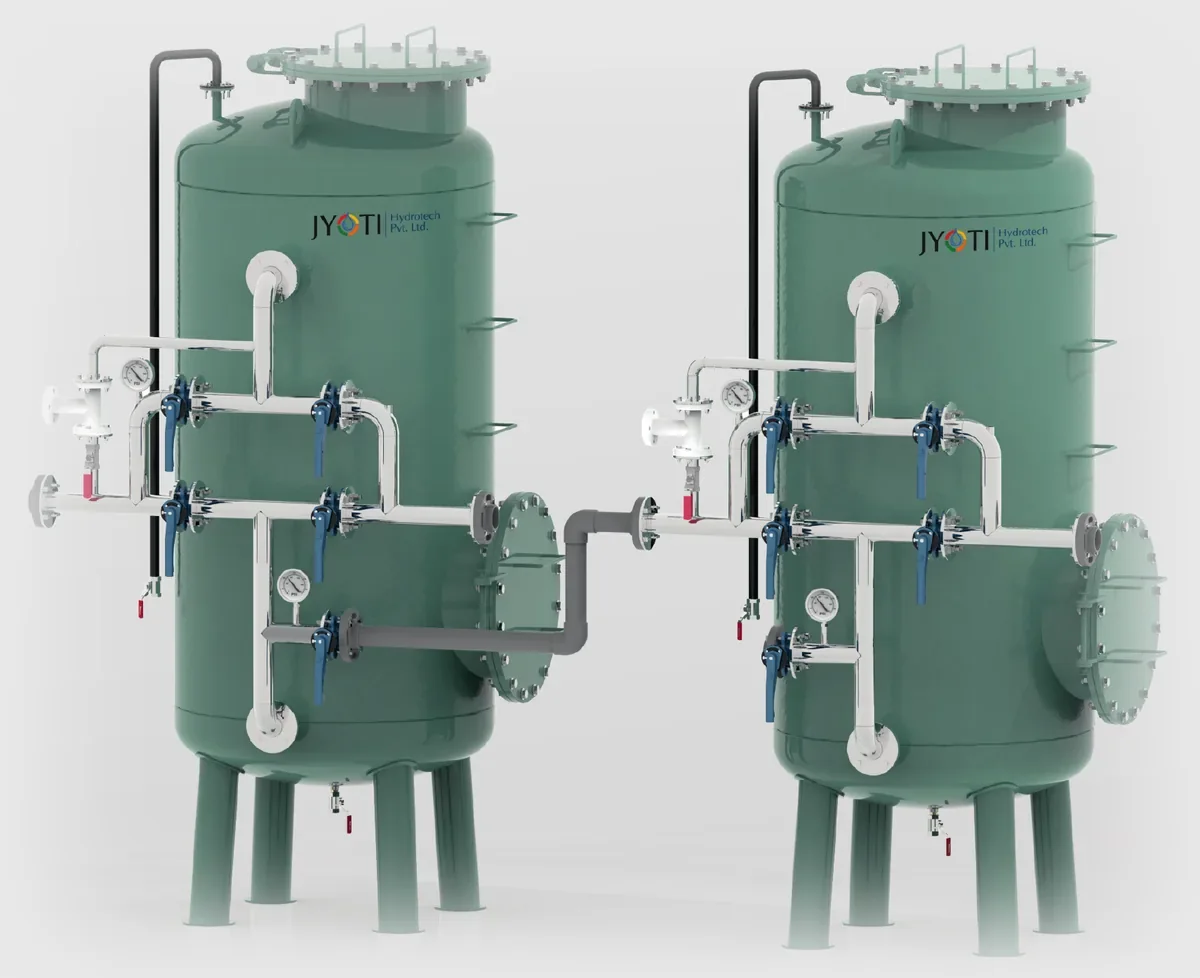
DM Plant & Mixed Bed process
Where even higher purity is needed, a Mixed Bed (MB) polisher follows the two-bed DM. Jyoti also supplies softening plants for hardness removal, degasser towers to strip CO₂ between cation and anion units, and resin defoulants to keep resin capacity high.
Built by Jyoti, backed by Jyoti chemistry
Every unit is designed from your water analysis, fabricated at our Sachin GIDC and Kim (Karanj) facilities, and supported after commissioning with Jyoti treatment chemicals, audits and AMC.
Key features
- High-purity treated water
- Ion-exchange technology
- Cation + anion system
- Critical-process suitability
- Stable performance
- Custom-engineered design
Applications
- Boiler feed-water treatment
- High-purity process water
- Pharmaceutical manufacturing
- Chemical processing
- Power and steam systems
- Textile processing units
- Laboratory and quality-control use
- Industrial utility-water systems

Technical parameters
Typical construction and design ranges for a Jyoti DM Plant & Mixed Bed. Every plant is sized to your water.
| Parameter | Jyoti design |
|---|---|
| Configuration | Two-bed (cation + anion), with optional degasser and mixed-bed polisher |
| Vessel construction | MS rubber-lined / FRP pressure vessels |
| Regeneration | Acid (cation) and caustic (anion), co-flow or counter-flow |
| Typical outlet (two-bed) | Low conductivity treated water suited to medium-pressure boilers |
| Typical outlet (with mixed bed) | Very low conductivity and silica for high-pressure boilers and pharma |
| Operation | Manual multiport valves or automatic valve nest with PLC |
| Resin care | Jyoti JC-203 / JC-204 resin defoulants |
Indicative values. Final design, capacity and guaranteed outlet quality are fixed after a treatability study of your water.
Questions buyers ask about the DM Plant & Mixed Bed
Not covered here? Ask an engineer on WhatsApp.
What is the difference between a softener and a DM plant?
A softener only exchanges hardness (calcium and magnesium) for sodium, so total dissolved solids stay the same. A DM plant removes almost all dissolved ions, giving water with very low conductivity.
When should I choose RO, DM or both?
RO removes most salts at lower chemical cost and suits high-TDS feed. DM gives higher purity. Many plants use RO first and a mixed bed after it, cutting regeneration chemicals while still reaching boiler-grade purity.
Why use a degasser tower?
Water leaving the cation unit carries dissolved CO₂. Stripping it in a degasser before the anion unit reduces the load on anion resin and the caustic needed for regeneration.
Works well with
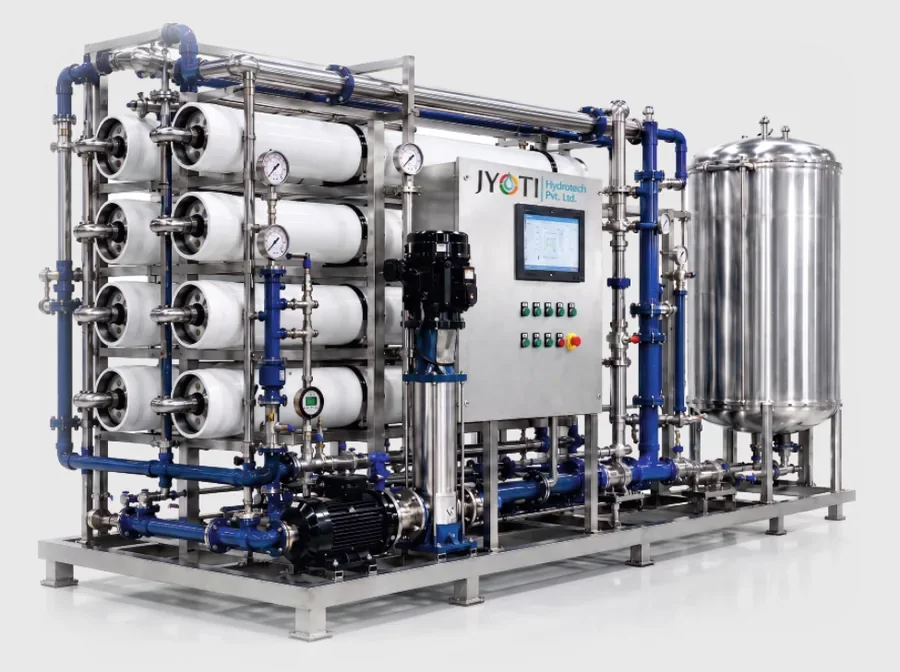
Reverse Osmosis (RO) Plant
Membrane desalting for process, boiler-feed and recycled water
View details →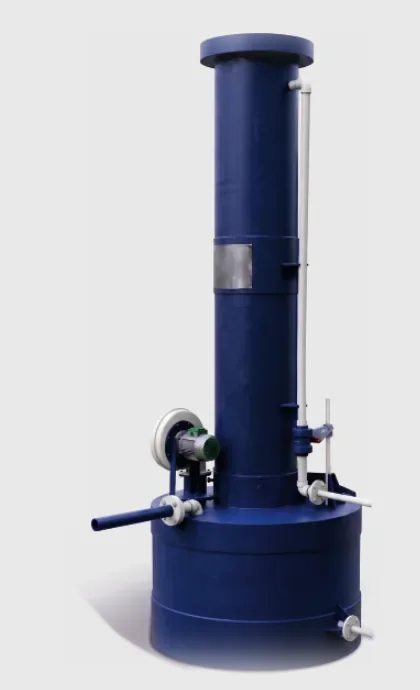
Degasser Tower
CO₂ stripping between cation and anion units
View details →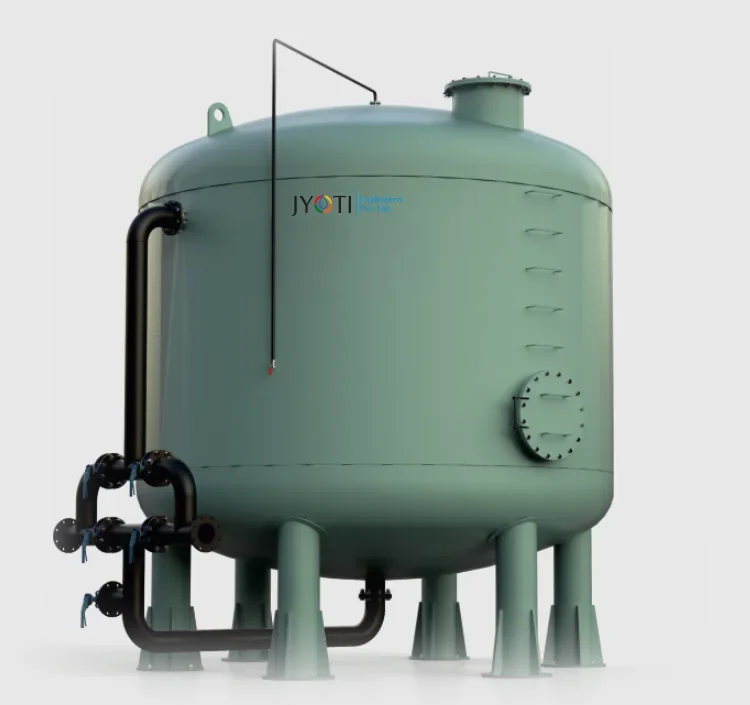
Multi Grade & Activated Carbon Filter
Reliable filtration for cleaner feed water
View details →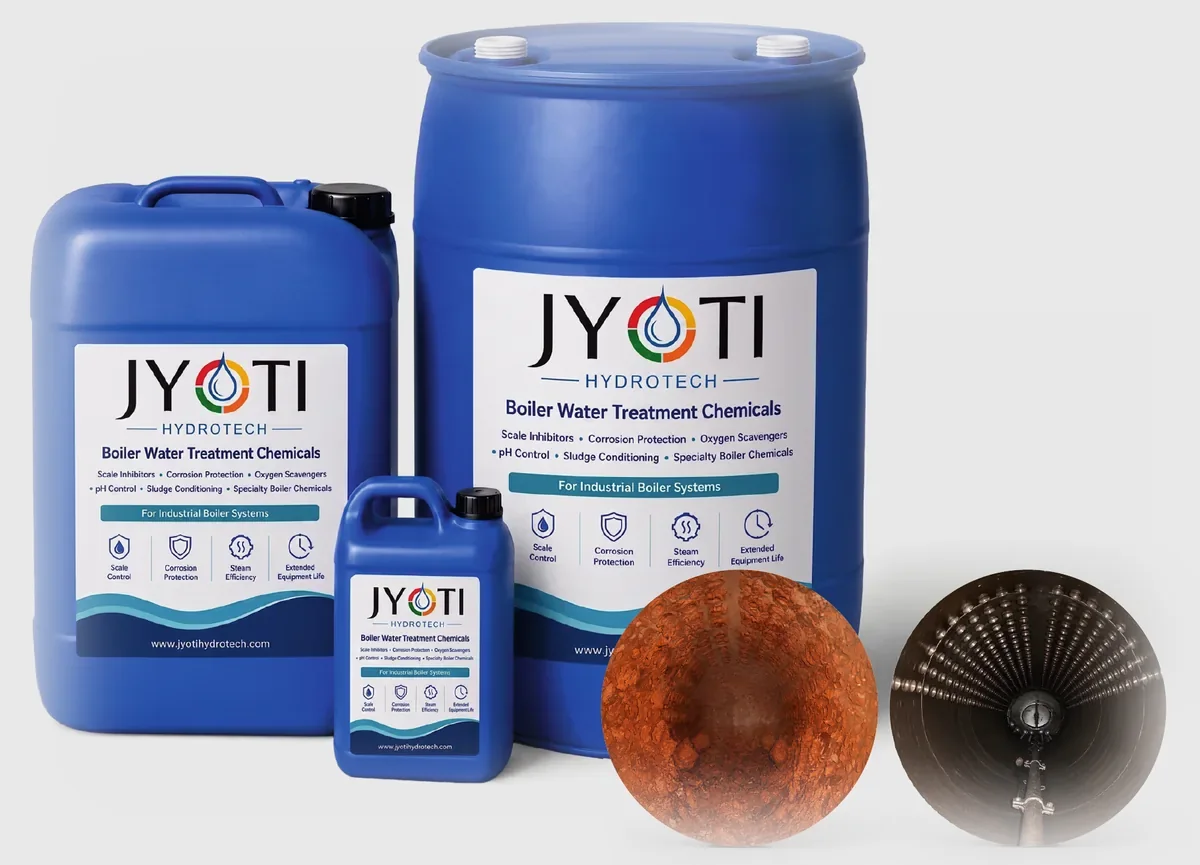
Boiler Water Treatment Chemicals
Scale, corrosion and oxygen control for boilers
View details →Want the full product booklet?
All Jyoti systems, equipment and the 78-product chemical range in one document.
Get a quote for your plant
Tell us about your water source, effluent, capacity and site. An engineer reviews it and comes back with the right scheme.
- Share your detailsWater or effluent type, flow (KLD / m³/h) and location.
- Engineer reviewWe call to clarify, and suggest sampling or a treatability study where needed.
- ProposalYou receive a technical scheme and commercial offer.