Zero Liquid Discharge
Complete water treatment and reuse – nothing leaves as liquid
Zero Liquid Discharge closes the water loop: effluent is treated, recycled through membranes, and the remaining reject is evaporated so only reusable water and solid salt leave the plant. Jyoti offers ZLD as a turnkey solution – design, engineering, supply, erection and commissioning.
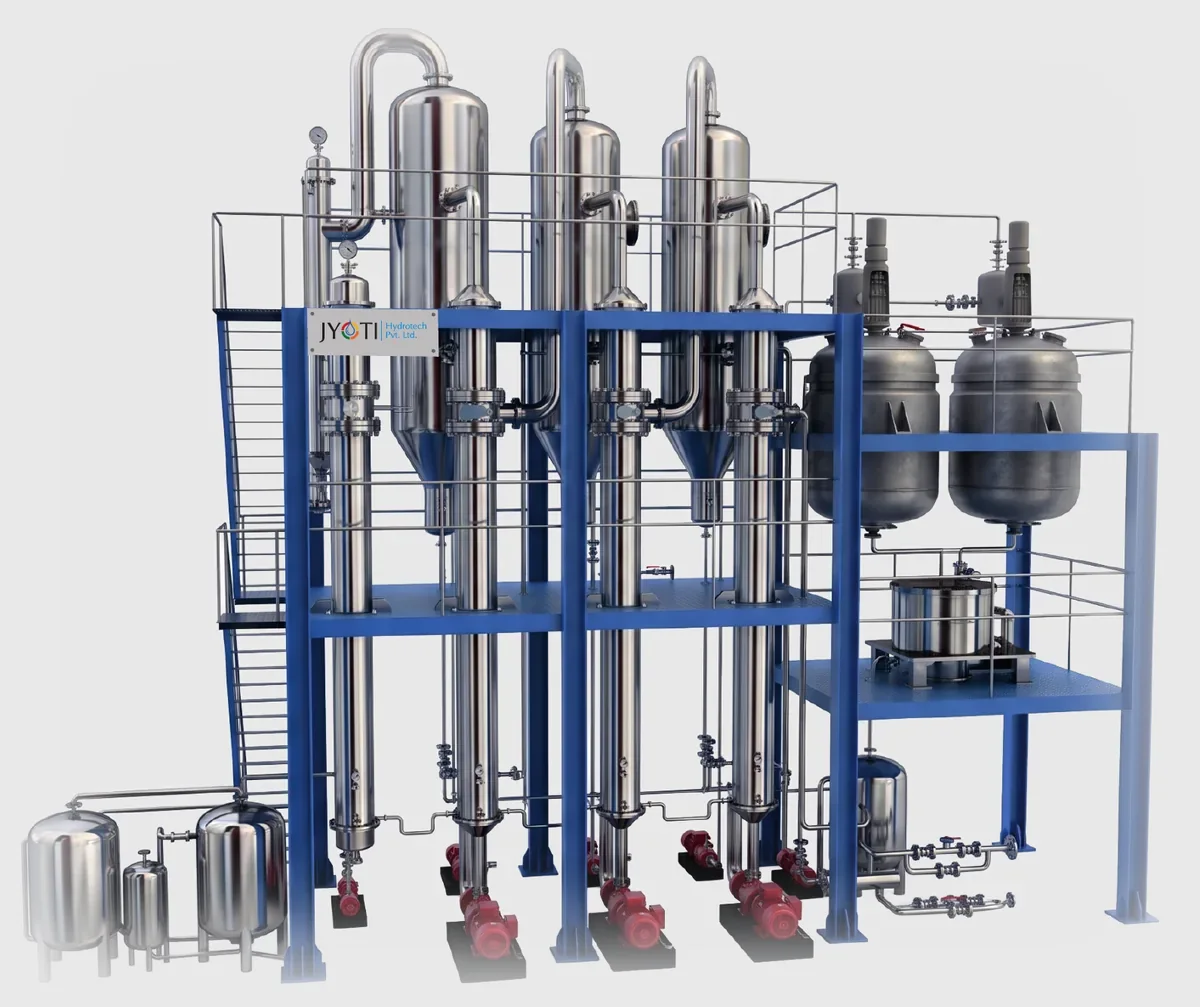
Zero Liquid Discharge (ZLD) process
ZLD viability depends on how the reject crystallises and on the thermal energy of evaporation, so we begin with stream segregation, treatability and bench-scale studies, then prepare a conceptual design and techno-economic feasibility report before you invest.
Built by Jyoti, backed by Jyoti chemistry
Every unit is designed from your water analysis, fabricated at our Sachin GIDC and Kim (Karanj) facilities, and supported after commissioning with Jyoti treatment chemicals, audits and AMC.
Key features
- Wastewater treatability and feasibility studies
- Stream segregation and shock-load assessment
- ETP performance improvement before ZLD
- Conceptual design and techno-economic feasibility report
- Turnkey design, supply, erection and commissioning
- RO, reject RO and MEE integration
- Bio-augmentation support during upsets
- Condensate recovery for reuse
Applications
- Textile dyeing and processing clusters
- Pharmaceutical and API units
- Chemical and dye intermediates
- Distillery and sugar
- Units required to achieve ZLD by consent conditions
- Water-scarce sites
Technical parameters
Typical construction and design ranges for a Jyoti Zero Liquid Discharge (ZLD). Every plant is sized to your water.
| Parameter | Jyoti design |
|---|---|
| Membrane stage | UF + RO with high-recovery reject RO |
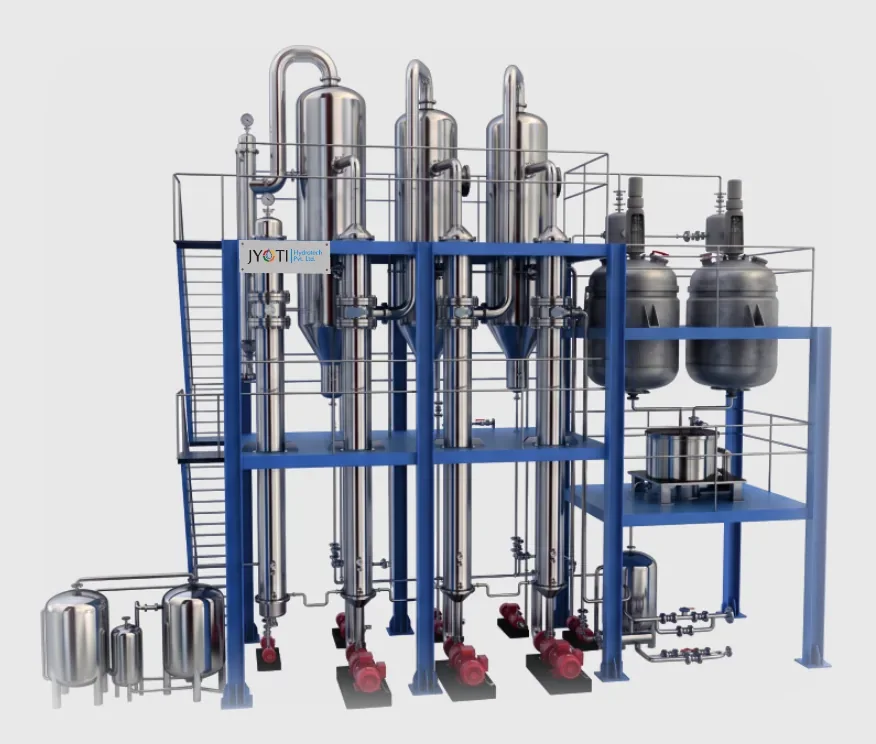
| Thermal stage | Multiple-effect evaporator with condensate recovery |
| Solids | ATFD / crystallizer / centrifuge as required |
| Studies | Characterisation, bench-scale treatability, feasibility report |
| Chemistry | JC-801 MEE antiscalant, JC-802 MEE descaling, RO antiscalants |
Indicative values. Final design, capacity and guaranteed outlet quality are fixed after a treatability study of your water.
Treatment and reuse with ZLD, step by step
How effluent moves from collection to reuse water, with RO reject sent through a second RO and the MEE so only steam condensate and solid salt remain.
Effluent from textile, pharma, steel & metal and chemical units enters the treatment plant.
Tap any unit to explore it. The flow plays on its own when this section is on screen.
Questions buyers ask about the Zero Liquid Discharge (ZLD)
Not covered here? Ask an engineer on WhatsApp.
Why is a feasibility study needed before ZLD?
ZLD cost is driven by how much reject must be evaporated and how that reject behaves when concentrated. Segregating streams and improving the ETP first can greatly shrink the thermal stage.
What happens to the salt from ZLD?
The concentrated brine from the MEE is dried into solid salt, which is disposed of through an authorised route or, where possible, recovered.
Works well with
Multiple Effect Evaporator (MEE)
Efficient evaporation for high-TDS wastewater
View details →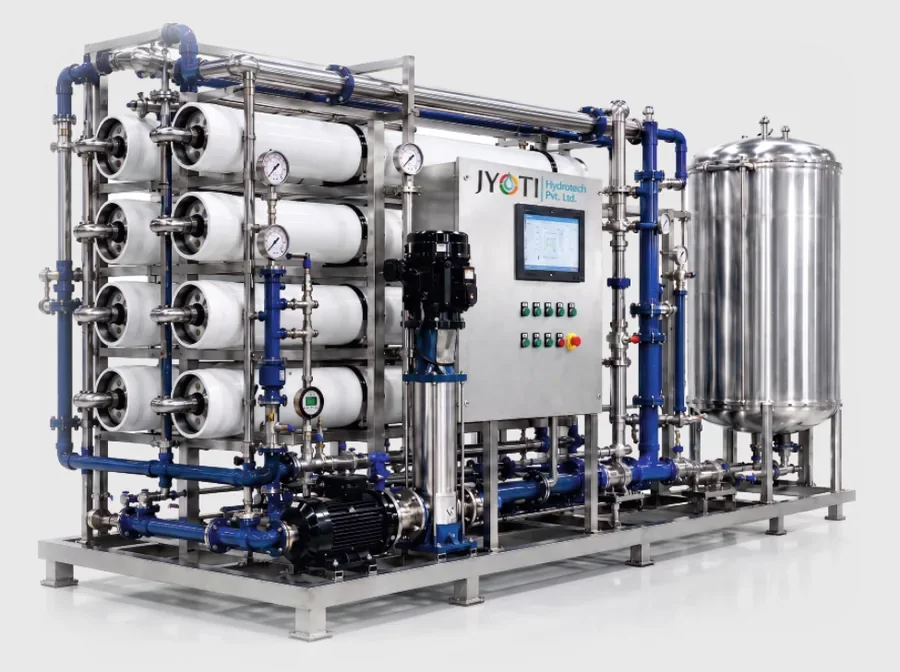
Reverse Osmosis (RO) Plant
Membrane desalting for process, boiler-feed and recycled water
View details →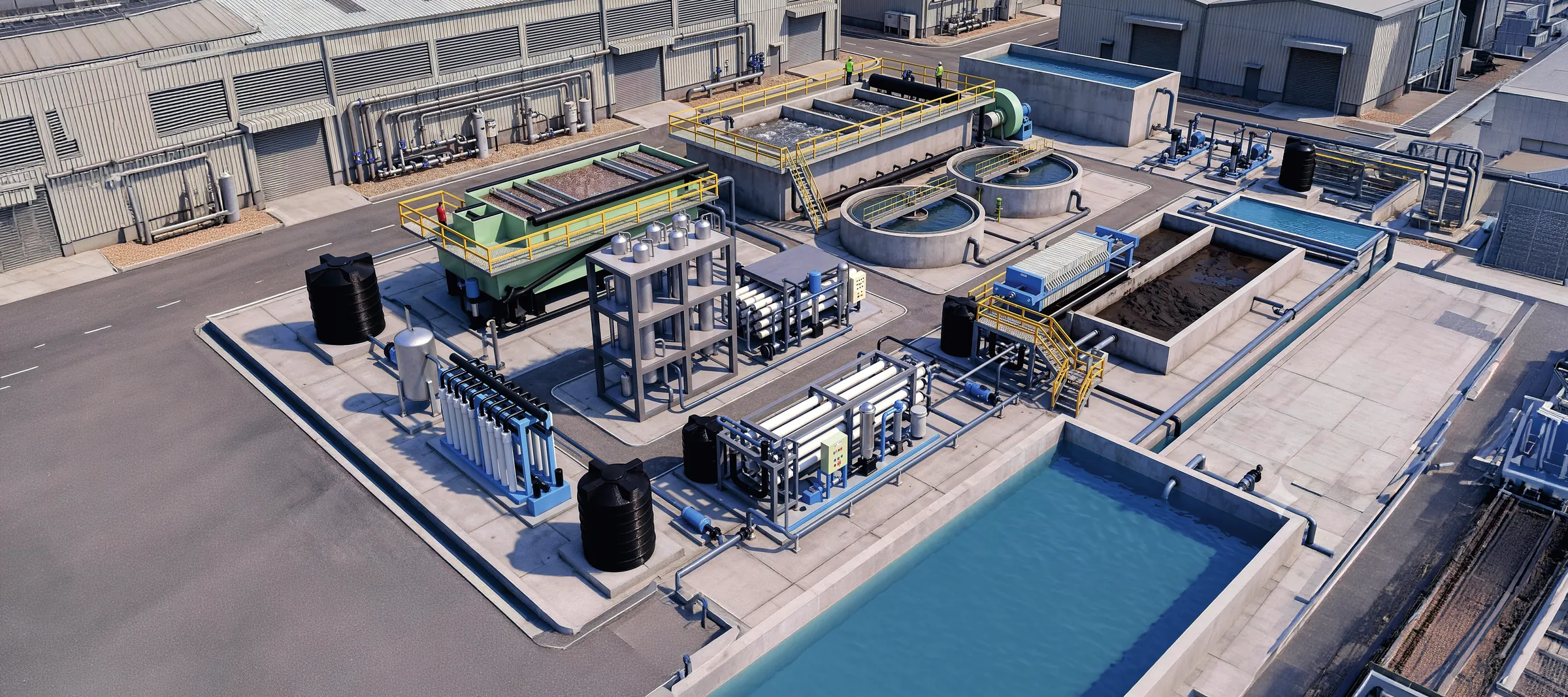
Effluent Treatment Plant (ETP)
Engineered treatment for complex industrial effluents
View details →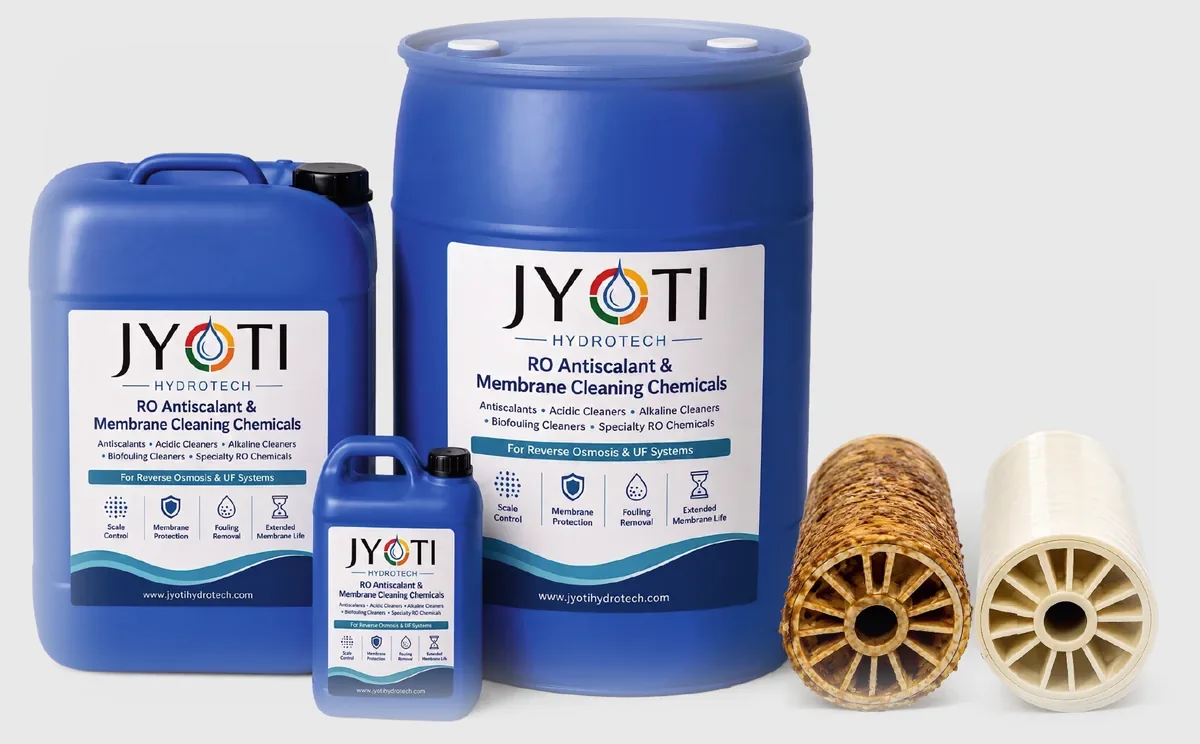
RO Antiscalants & Membrane Cleaners
Antiscalants, cleaners and MEE chemicals
View details →Want the full product booklet?
All Jyoti systems, equipment and the 78-product chemical range in one document.
Get a quote for your plant
Tell us about your water source, effluent, capacity and site. An engineer reviews it and comes back with the right scheme.
- Share your detailsWater or effluent type, flow (KLD / m³/h) and location.
- Engineer reviewWe call to clarify, and suggest sampling or a treatability study where needed.
- ProposalYou receive a technical scheme and commercial offer.