
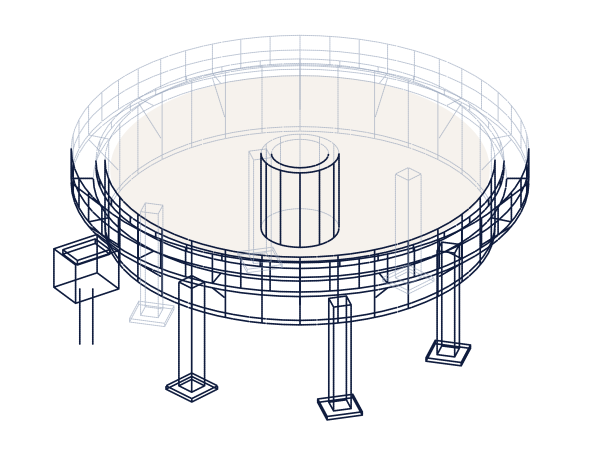
Rotary Drum Screen
Fine screening of fibres and solids with self-cleaning drum
A rotary drum screen passes wastewater through a slowly turning wedge-wire or perforated drum. Fine solids and fibres are held on the drum surface and scraped off into a discharge chute, while screened water flows to the next stage.
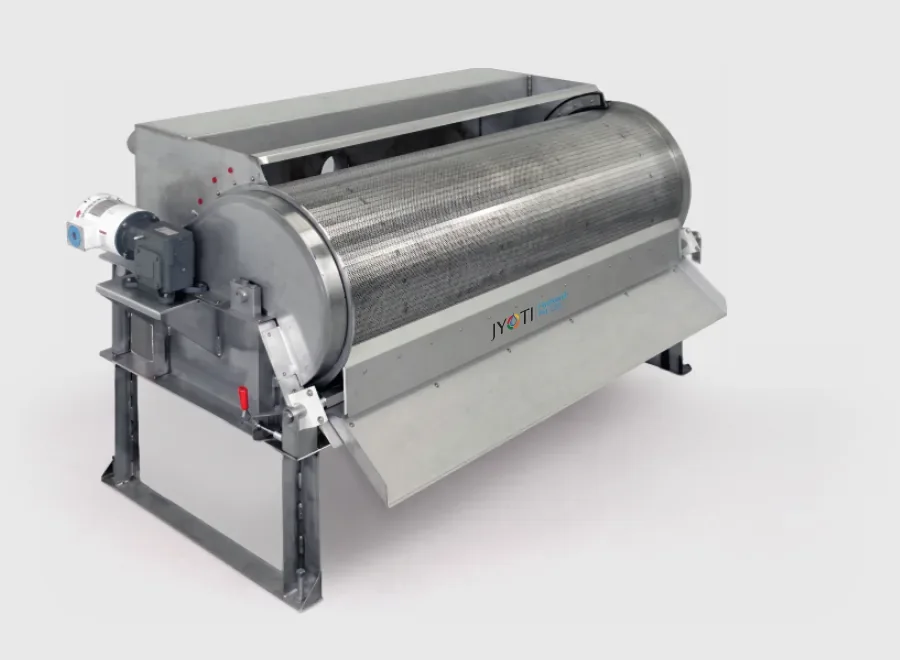
Rotary Drum Screen process
It is especially effective on textile, food and paper effluents, where fibres and fine solids would otherwise load the biological stage.
Built by Jyoti, backed by Jyoti chemistry
Every unit is designed from your water analysis, fabricated at our Sachin GIDC and Kim (Karanj) facilities, and supported after commissioning with Jyoti treatment chemicals, audits and AMC.
Key features
- Self-cleaning with spray wash
- High fine-solid capture
- SS construction
- Low power drive
- Compact, enclosed design
- Continuous operation
Applications
- Textile and yarn processing
- Food and beverage effluent
- Paper and pulp
- Slaughterhouse and dairy
- STP fine screening
Technical parameters
Typical construction and design ranges for a Jyoti Rotary Drum Screen. Every plant is sized to your water.
| Parameter | Jyoti design |
|---|---|
| Construction | SS 304 / 316 drum, frame and chute |
| Screen | Wedge-wire or perforated drum |
| Cleaning | Internal / external spray wash with scraper |
Indicative values. Final design, capacity and guaranteed outlet quality are fixed after a treatability study of your water.
Where is a rotary drum screen installed?
After coarse screening and before equalization or the biological stage, to remove fibres and fine solids.
Works well with
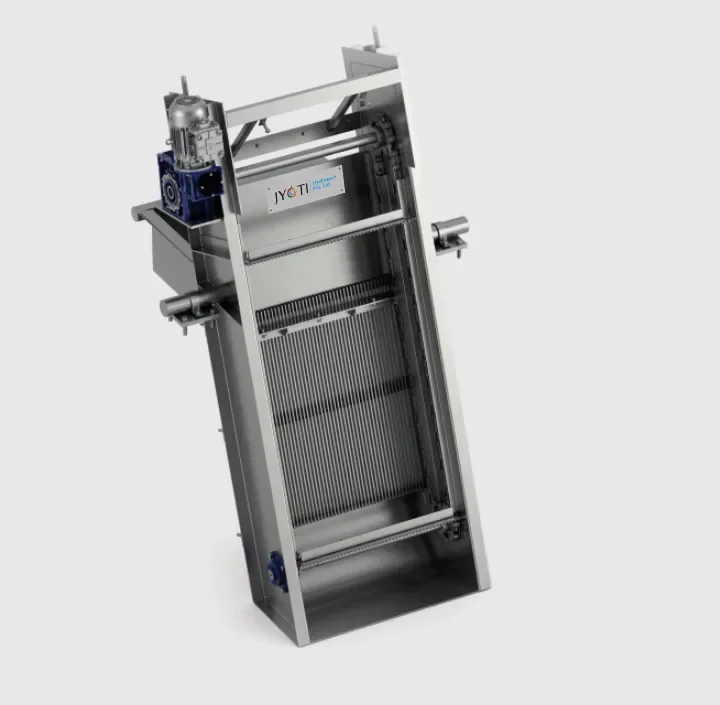
Mechanical Bar Screen
Automatic removal of coarse solids at the plant inlet
View details →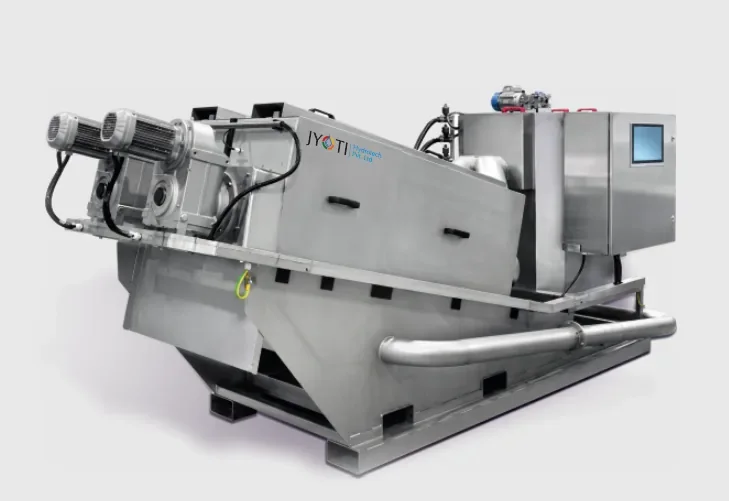
Screw Press Sludge Dewatering
Continuous sludge thickening and dewatering
View details →
Effluent Treatment Plant (ETP)
Engineered treatment for complex industrial effluents
View details →Want the full product booklet?
All Jyoti systems, equipment and the 78-product chemical range in one document.
Get a quote for your plant
Tell us about your water source, effluent, capacity and site. An engineer reviews it and comes back with the right scheme.
- Share your detailsWater or effluent type, flow (KLD / m³/h) and location.
- Engineer reviewWe call to clarify, and suggest sampling or a treatability study where needed.
- ProposalYou receive a technical scheme and commercial offer.