
Straight answers on water & wastewater treatment
Practical guides on ETP, STP, RO and ZLD plants – what each stage does, what the norms say, and how to fix a plant that is not performing.
 Santosh PrajapatiManaging Director, Jyoti Hydrotech Pvt. Ltd.
7 articles
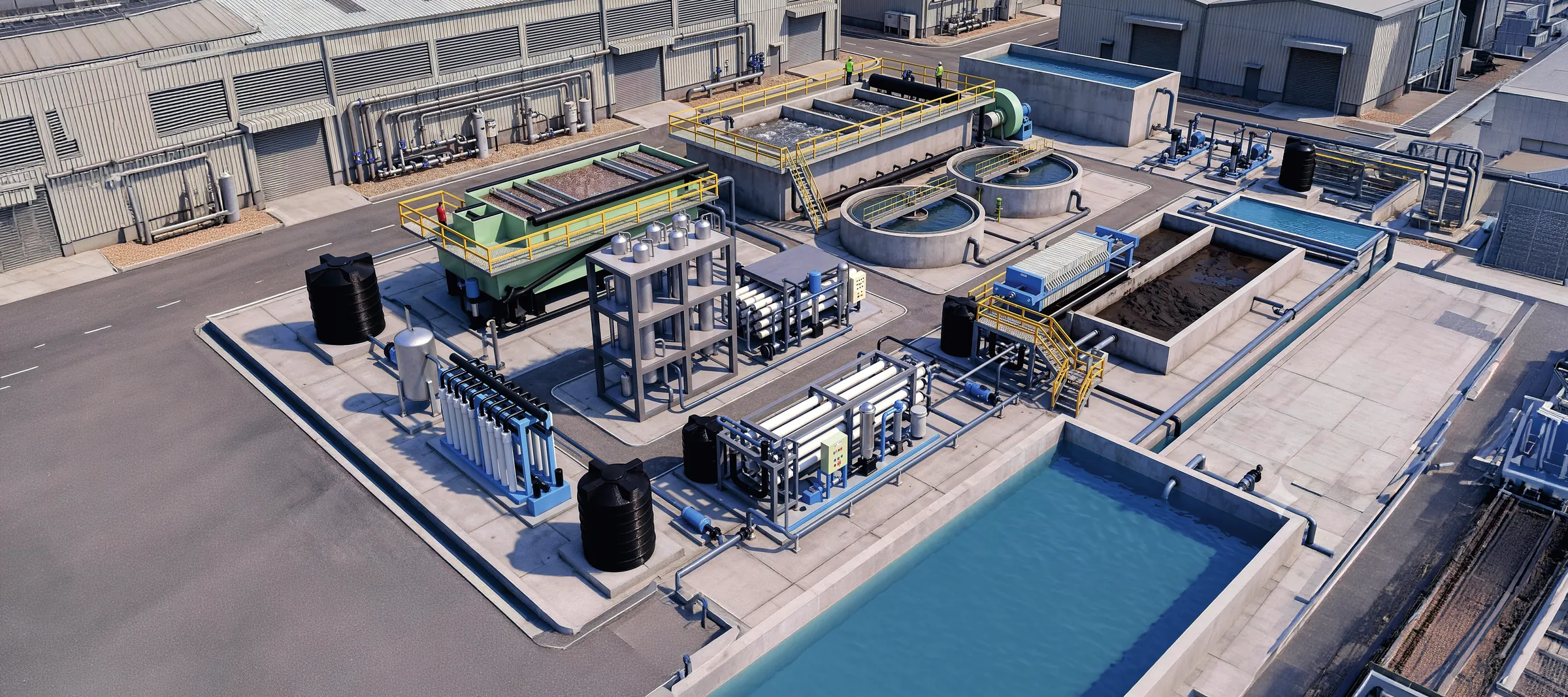
What Is an Effluent Treatment Plant (ETP)? Process, Stages and How to Choose One
What an effluent treatment plant is, how each ETP stage works, which discharge limits apply in India, what drives ETP cost and how to choose the right ETP manufacturer.
Santosh Prajapati · · 6 min read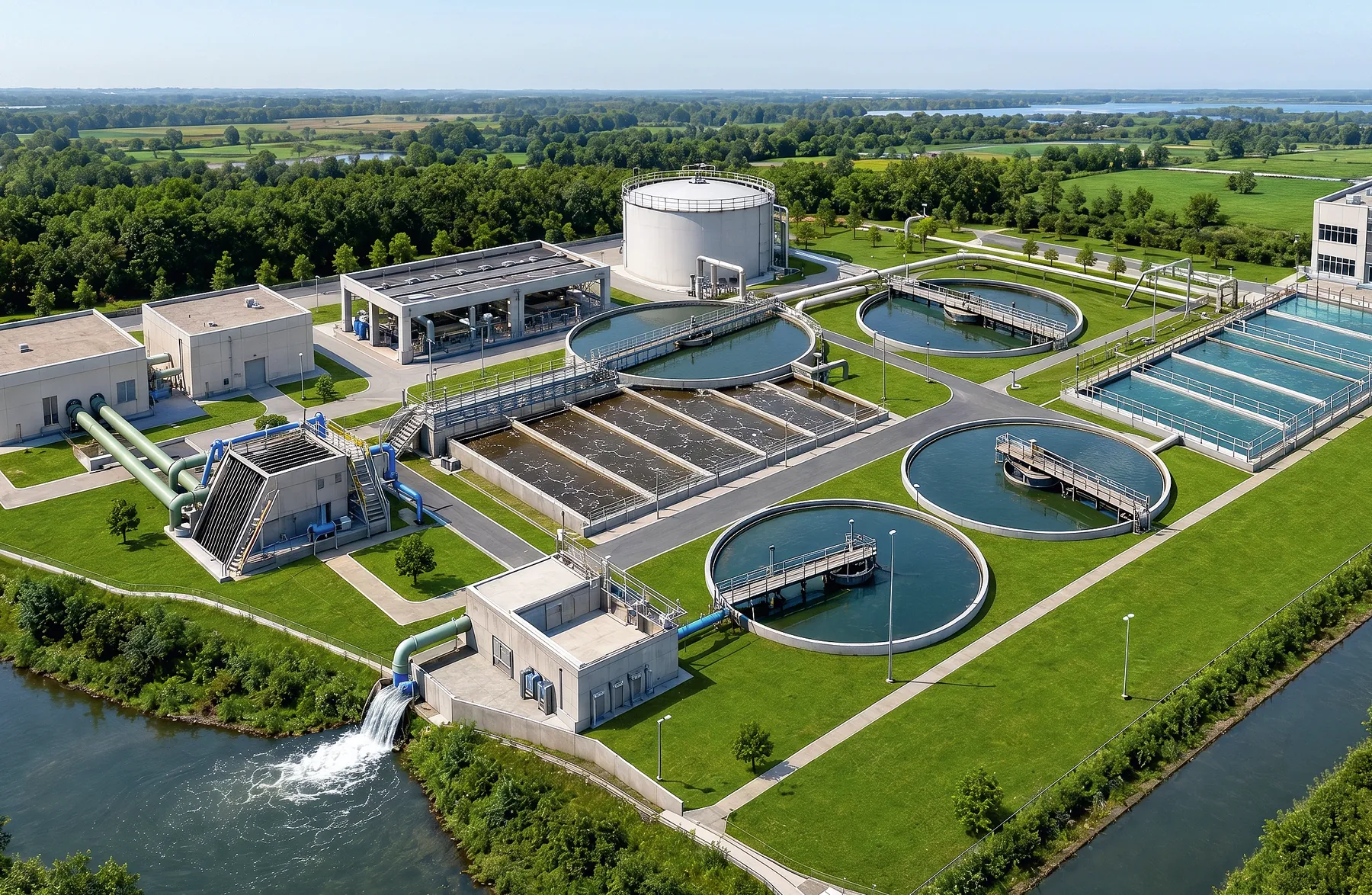
ETP vs STP vs CETP: What’s the Difference and Which One Does Your Plant Need?
ETP, STP and CETP compared: what each plant treats, how the processes differ, who needs which one, and when a factory should join a CETP instead of building its own ETP.
Santosh Prajapati · · 4 min read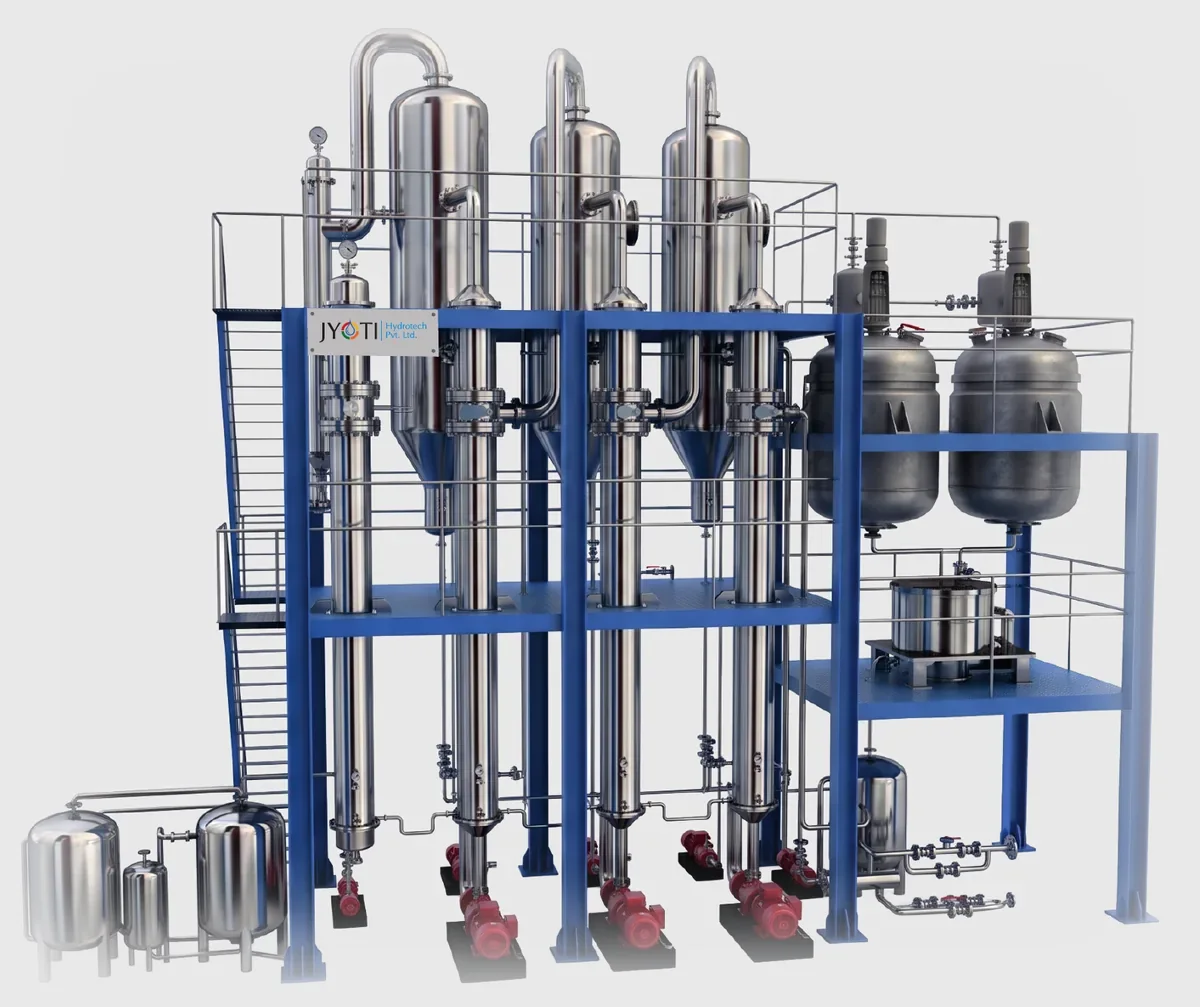
Zero Liquid Discharge (ZLD) Explained: How It Works and When Your Plant Needs It
How zero liquid discharge works – ETP, UF, RO, reject RO, MEE and crystallisation – which industries need ZLD, what drives ZLD running cost and how to make a ZLD plant feasible.
Santosh Prajapati · · 3 min read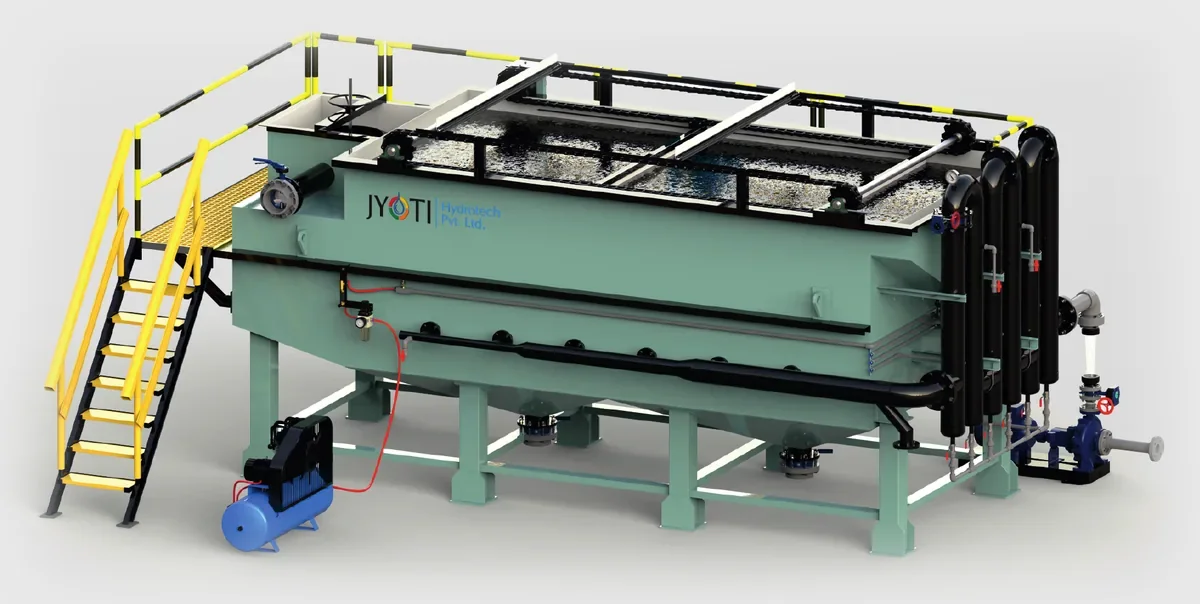
Why Is My ETP Not Meeting Norms? 8 Common ETP Problems and How to Fix Them
Troubleshooting guide for effluent treatment plants: high outlet COD, sludge bulking, foaming, colour, high TSS, odour, oil carry-over and RO fouling – causes, checks and fixes.
Santosh Prajapati · · 4 min read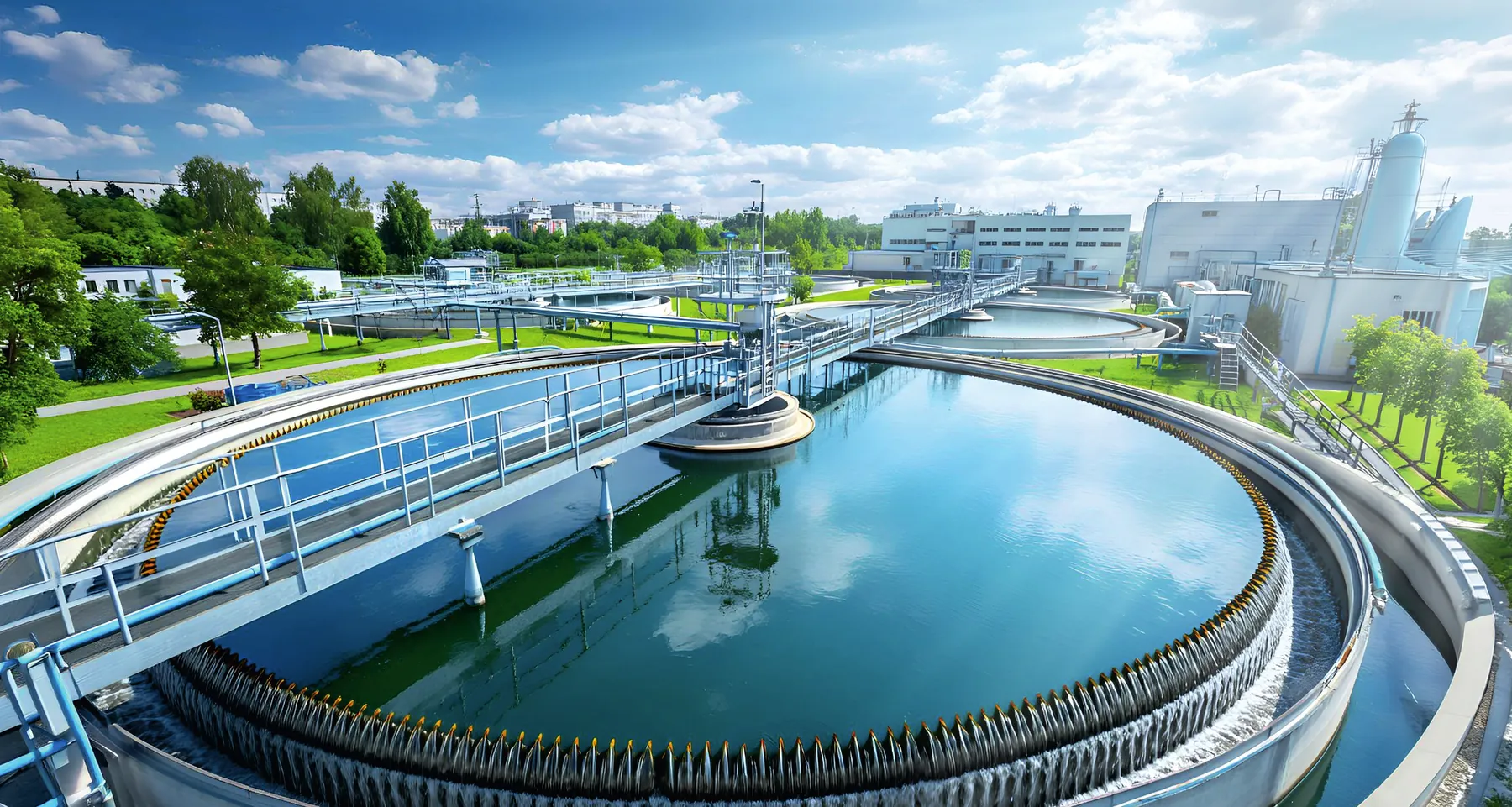
Textile Effluent Treatment: Process, Colour & COD Removal and ZLD for Dyeing Units
How textile dyeing and processing effluent is treated in India: pollutants by process step, discharge norms, the step-by-step textile ETP, colour and COD removal, TDS, ZLD and reuse.
Santosh Prajapati · · 7 min read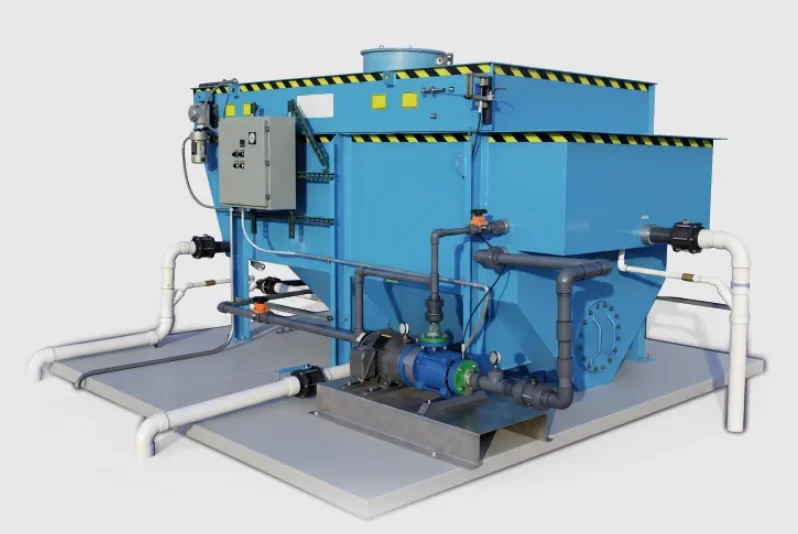
MBBR vs SBR vs MBR vs ASP: Which Biological Treatment Is Right for Your STP or ETP?
MBBR, SBR, MBR and conventional activated sludge (ASP) compared on footprint, treated-water quality, power, operation and cost – with India’s STP norms and a simple guide to choosing for sewage or industrial effluent.
Santosh Prajapati · · 6 min read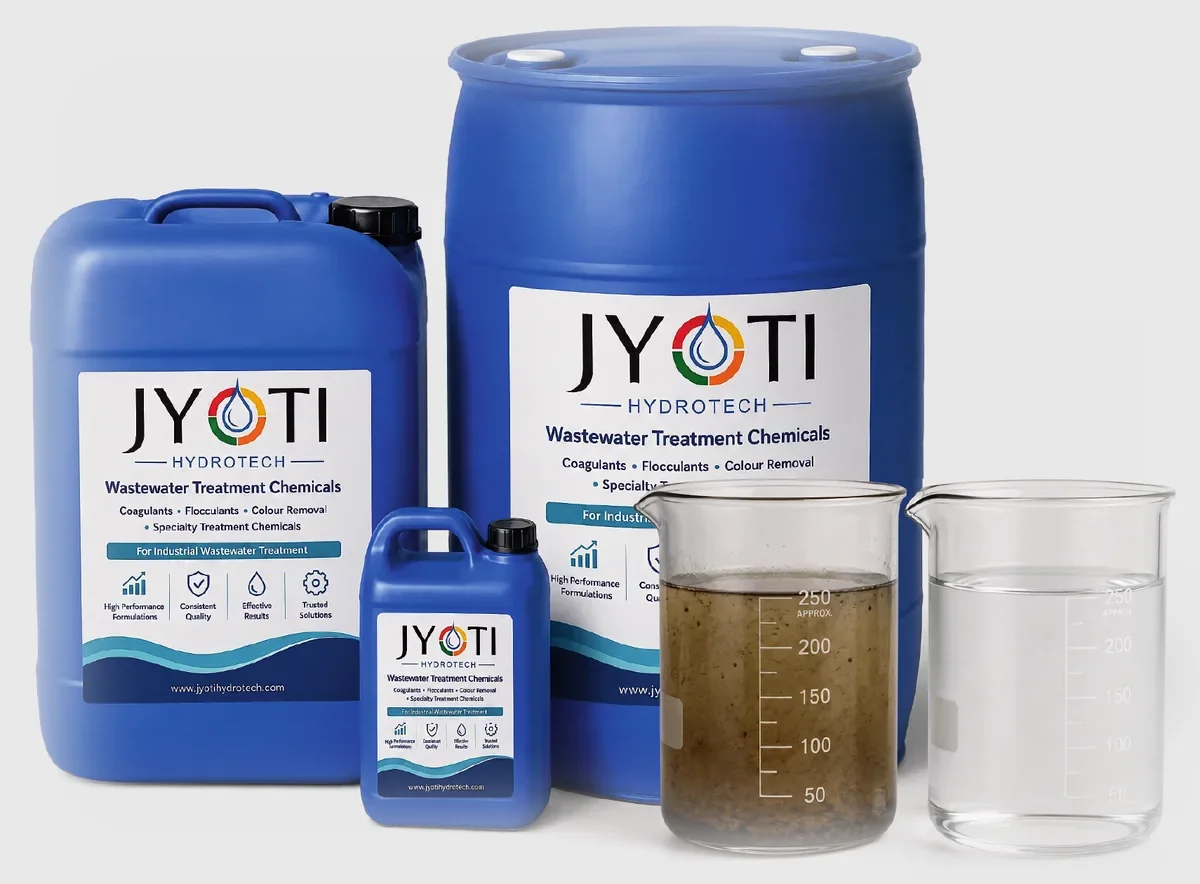
Coagulant vs Flocculant: How to Choose and Dose ETP Chemicals (with Jar Test Steps)
The difference between a coagulant and a flocculant, alum vs PAC vs ferric vs organic coagulants, anionic vs cationic polyelectrolyte, how to run a jar test step by step and how to calculate chemical dose.
Santosh Prajapati · · 7 min readNo article matches that search yet. Ask us directly on WhatsApp – we reply in working hours.
Questions plant owners ask us most
Short, straight answers to the ETP, STP and ZLD questions people search for most – each links to the full guide or the right Jyoti system.
01What is the full form of ETP?
ETP stands for Effluent Treatment Plant – a plant that treats industrial wastewater before discharge or reuse.
BasicsWhat is an ETP?
03What is the difference between primary and secondary treatment in an ETP?
Primary treatment uses chemicals and physical separation to remove suspended solids, oil and colour. Secondary treatment uses bacteria to break down dissolved organic matter and reduce BOD and COD.
BasicsWhat is an ETP?
05How is textile dyeing effluent treated?
Through screening, equalisation with cooling and pH correction, coagulation and flocculation for colour and solids, biological treatment for BOD and COD, and tertiary filtration. Reuse or ZLD adds UF, RO and an evaporator, because an ETP does not remove dissolved salts.
07How much does an effluent treatment plant cost?
There is no fixed price per KLD. Cost depends on the daily flow, how strong and complex the effluent is (COD, colour, TDS, oil), whether water is discharged, reused or taken to ZLD, the material of construction, civil or prefabricated build, and the level of automation. Running cost comes mainly from power (aeration is often the largest share), chemicals, sludge disposal and manpower. A treatability study and your flow data give an accurate quote.
Cost & complianceJyoti ETP systems
09Do I need pollution control board consent for an ETP?
Yes. A unit that generates trade effluent needs Consent to Establish (CTE) from the State Pollution Control Board before it builds, and Consent to Operate (CTO) before it starts production – in Gujarat this is the GPCB. The ETP's design, capacity and discharge route are part of the application, and the consent sets the limits you must meet. A major change to the plant can need an amended consent.
Cost & complianceWhat is an ETP?
11What DO level should an aeration tank have?
A common operating target is around 2 mg/L of dissolved oxygen, measured at several points. Your plant’s design may specify a different range.
Plant operationWhy is my ETP not meeting norms?
13What is MLSS and what level should it be?
MLSS (mixed liquor suspended solids) is the amount of activated sludge – the working bacteria – in the aeration tank, measured in mg/L. A conventional activated sludge plant often runs at roughly 2,000–4,000 mg/L, extended aeration higher, and an MBR much higher. The right value depends on your plant's design and load, so track it daily together with SV30 and DO.
Plant operationWhy is my ETP not meeting norms?
15What is the full form of ZLD?
ZLD stands for Zero Liquid Discharge – no liquid effluent leaves the plant; water is recovered and the remaining salts leave as solids.
ZLD & reuseZLD explained
17Can treated ETP water be reused?
Yes – with the right polishing. Water that meets discharge norms is usually not clean enough for reuse, so it goes through tertiary treatment such as filtration, UF and RO. After that it is commonly reused for cooling towers, washing, process water and – after further treatment – boiler feed. The use you have in mind decides how far the water must be treated.
ZLD & reuseJyoti RO plants
02What is the main difference between ETP and STP?
An ETP treats industrial effluent that can contain chemicals, colour and metals, so it combines chemical and biological treatment. An STP treats domestic sewage, which is mainly biodegradable and is treated biologically.
BasicsETP vs STP vs CETP
04Which is better – MBBR, SBR or MBR?
It depends on space, reuse goals and the norms you must meet. MBBR is compact, easy to run and ideal for upgrades; SBR handles variable flow and nutrients in one tank but needs reliable automation; MBR gives reuse-grade water in the smallest footprint, at higher power and maintenance cost.
06What is the difference between BOD and COD?
Both measure how much oxygen the pollution in water would use up. BOD (biochemical oxygen demand) counts only what microbes can break down – in India it is tested over 3 days at 27 °C. COD (chemical oxygen demand) counts almost everything that a strong chemical oxidant can break down, so COD is always higher than BOD. The BOD-to-COD ratio tells an engineer how well biological treatment will work: a low ratio means much of the load is hard to degrade.
08What capacity of ETP does my factory need?
Size the plant on your measured effluent flow in KLD (kilolitres per day), not on a guess. Check the peak day, not the average; allow for batch discharges and shift-wise variation with an equalisation tank; and keep a margin for planned expansion. A water balance of the whole factory – water in, water lost, effluent out – is the most reliable starting point.
Cost & complianceConsultancy & treatability study
10Is an STP enough for a factory?
Only if the factory has no process wastewater. Any industrial effluent needs an ETP or a CETP connection; the STP handles domestic sewage.
Cost & complianceETP vs STP vs CETP
12What is the difference between a coagulant and a flocculant?
A coagulant neutralises the charge on fine particles so they form small micro-flocs; a flocculant – usually a polyelectrolyte – bridges those into large flocs that settle or float. Coagulant goes first with rapid mixing, flocculant second with slow mixing; a jar test sets the doses.
Plant operationCoagulant vs flocculant
14What is SVI and why does it matter?
Sludge volume index measures how well activated sludge settles. A high SVI means a light, bulky sludge that may not settle in the clarifier.
Plant operationWhy is my ETP not meeting norms?
16Is ZLD mandatory in India?
Not for every unit. It depends on the industry, the location and the conditions in each unit’s consent from the State Pollution Control Board. Check your own consent.
ZLD & reuseZLD explained

Santosh Prajapati
Santosh Prajapati founded Jyoti Hydrotech Pvt. Ltd. in Surat in 1993 and leads the company as Managing Director. Under his leadership Jyoti has designed, built and run water and wastewater treatment plants for Indian industry – ETP, STP, RO, ZLD and more – and exported systems to eight countries.
- Founded Jyoti Hydrotech in 1993
- Plants, equipment and 78 treatment chemicals under one roof
- Branches in 7 Indian states, exports to 8 countries
From the guide to the solution
Talk to a treatment engineer
Tell us about your water source, effluent, capacity and site. An engineer reviews it and comes back with the right scheme.
- Share your detailsWater or effluent type, flow (KLD / m³/h) and location.
- Engineer reviewWe call to clarify, and suggest sampling or a treatability study where needed.
- ProposalYou receive a technical scheme and commercial offer.