What Is an Effluent Treatment Plant (ETP)? Process, Stages and How to Choose One
A plain-language guide to how industrial effluent is treated – stage by stage – and what to check before you invest in a plant.
 Santosh Prajapati · Managing Director
· 6 min read
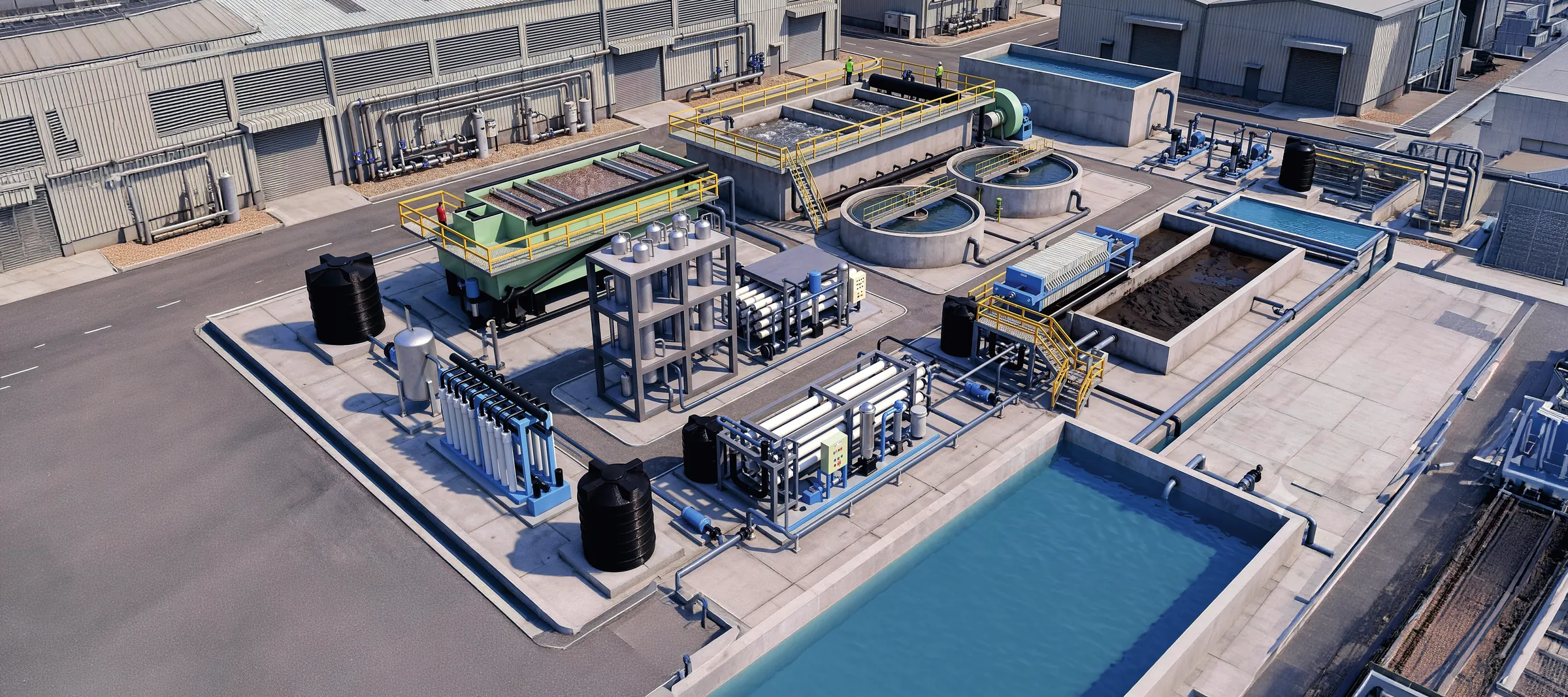
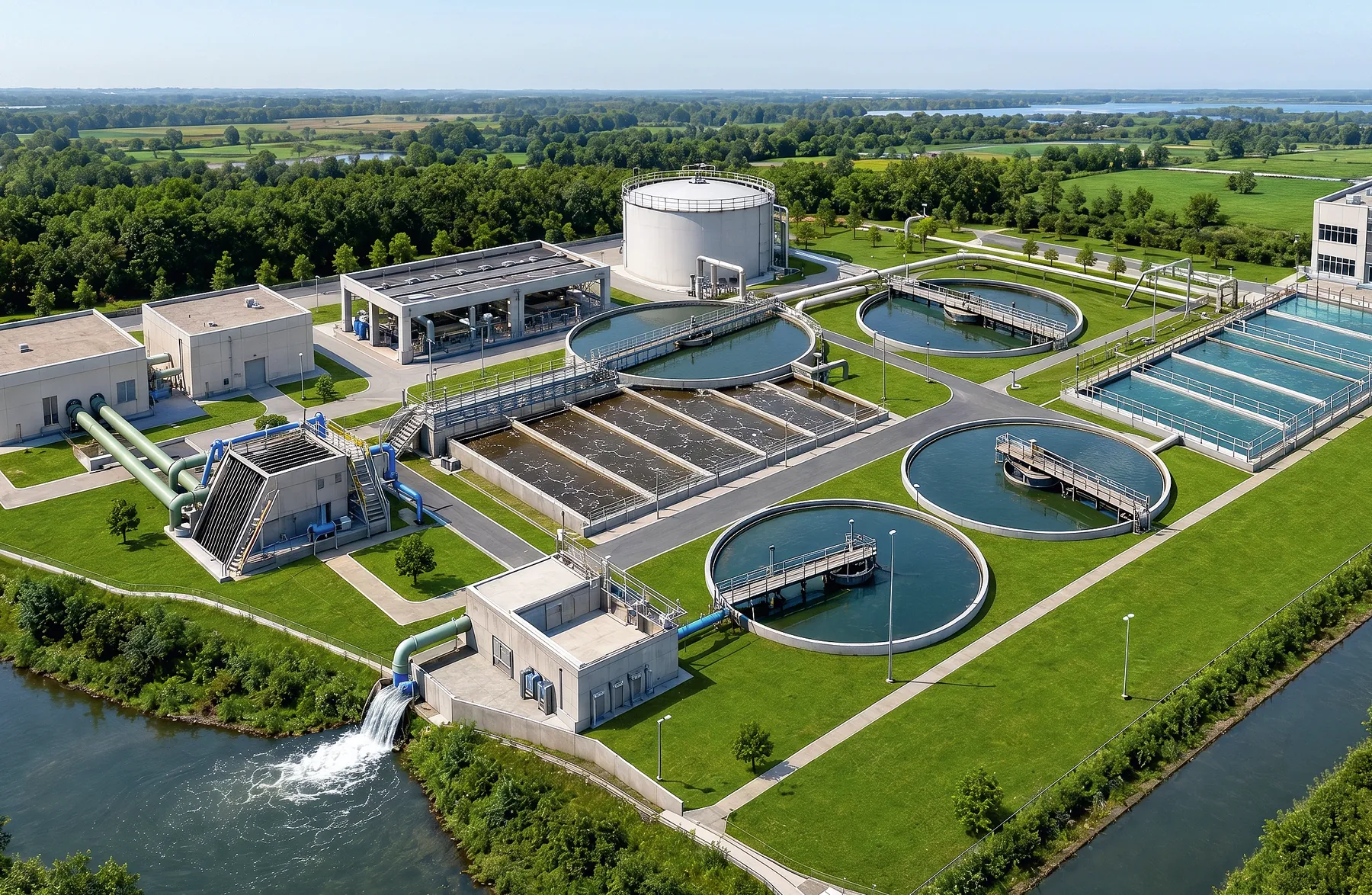
An effluent treatment plant (ETP) treats a factory’s industrial wastewater so it can be safely discharged or reused. It removes solids, oil, colour, organic load (BOD and COD) and toxic substances in four steps – preliminary, primary (physico-chemical), secondary (biological) and tertiary treatment – with a separate line for handling the sludge.
Why does a factory need an ETP?
Almost every manufacturing process uses water and returns it changed: dyes and auxiliaries in textiles, solvents and intermediates in pharma and chemicals, oil and metals in steel and engineering, fats and sugars in food and dairy. Released untreated, this effluent strips oxygen from rivers, harms aquatic life and contaminates groundwater.
In India, industries need consent from the State Pollution Control Board to establish and to operate, and the consent sets the quality the treated effluent must meet. An ETP is how a unit meets those conditions – and, increasingly, how it recovers water for reuse when fresh water is scarce or expensive.
What are the stages of an effluent treatment plant?
A typical industrial ETP moves the effluent through the stages below. Not every plant needs every unit – the treatability study decides which ones are used.
- Collection, screening and oil removal. Bar or drum screens take out rags, fibres and debris; an oil & grease separator skims free oil.
- Equalization. A holding tank – often designed for several hours of flow – evens out swings in flow, pH and pollution load. Air mixing keeps solids suspended and stops the effluent turning septic.
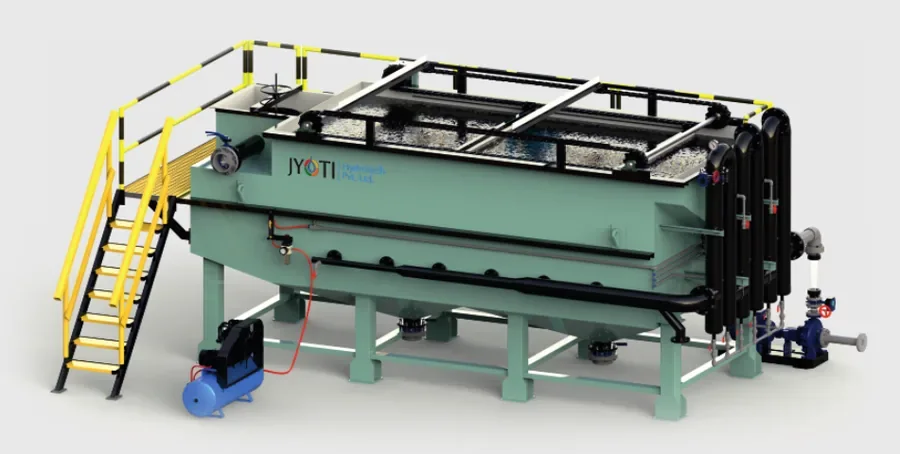
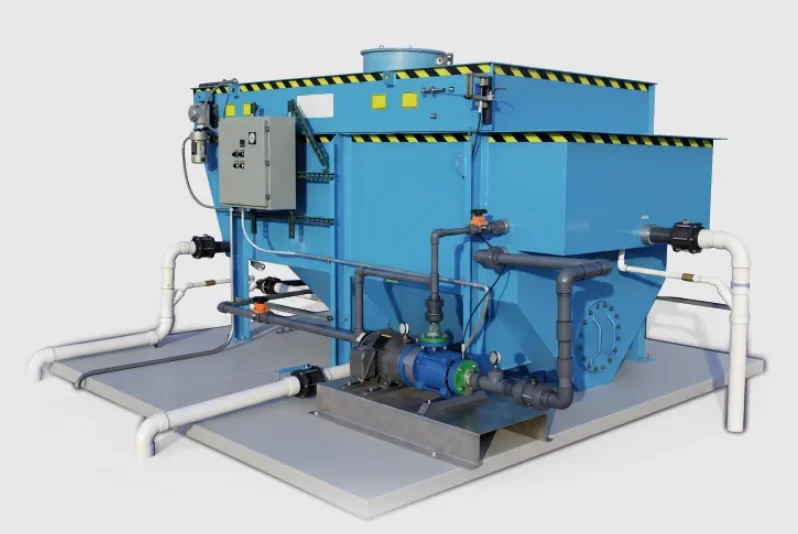
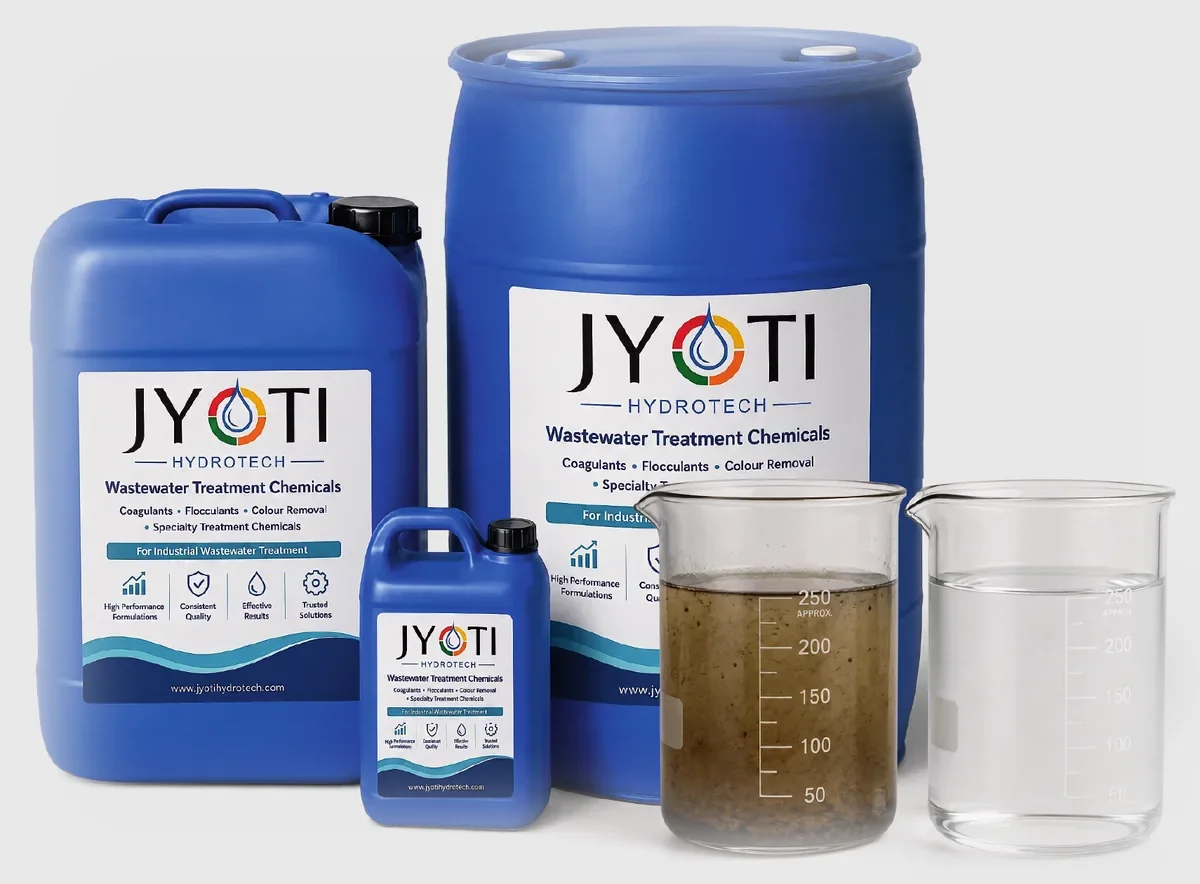
- Primary (physico-chemical) treatment. Coagulant, flocculant and pH-correction chemicals are dosed; the flocs formed are separated in a clarifier or a dissolved air flotation (DAF) unit.
- Secondary (biological) treatment. Bacteria in an aeration tank – activated sludge, MBBR, SBR or MBR – consume dissolved organics and bring down BOD and COD.
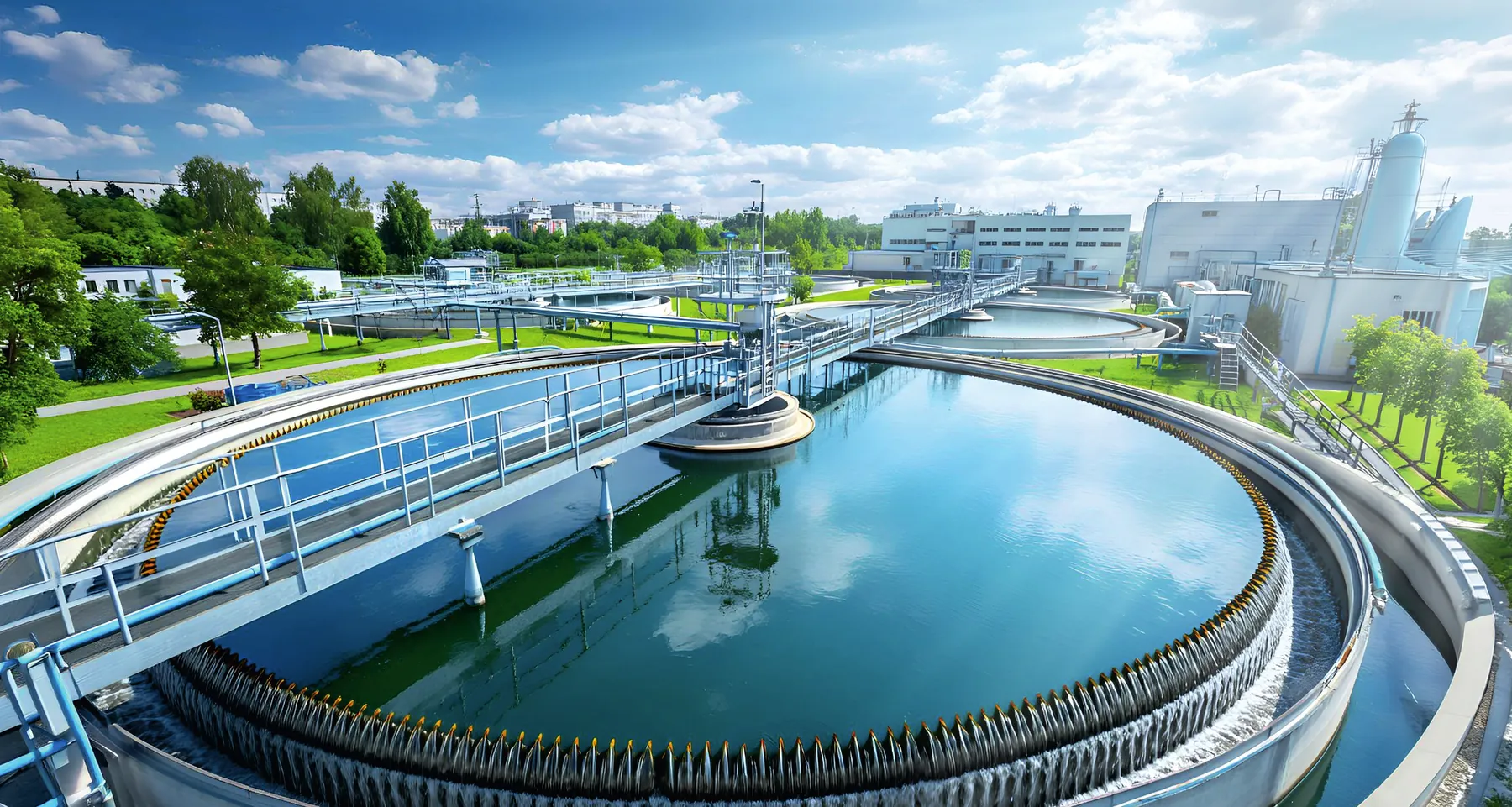
- Secondary clarification. Biomass settles out; part returns to the aeration tank and the excess goes to sludge handling.
- Tertiary treatment. Multi grade and activated carbon filters, ultrafiltration and disinfection polish the water for discharge or for reuse through RO.
- Sludge handling. Sludge is thickened and dewatered in a screw press or filter press, and the dry cake goes for authorised disposal.
| Stage | Purpose | Typical Jyoti equipment |
|---|---|---|
| Preliminary | Remove debris, fibres, free oil | Bar screen, drum screen, OGS |
| Equalization | Even out flow and load | Equalization tank with air mixing |
| Primary | Remove suspended solids, colour, oil | Chemical dosing, DAF, HRSCC |
| Secondary | Cut BOD / COD | Aeration, MBBR, MBR |
| Tertiary | Polish for discharge or reuse | MGF + ACF, UF, RO |
| Sludge | Thicken and dewater | Screw press |
What does an ETP remove from wastewater?
Each pollutant is handled by a different part of the plant, which is why the scheme depends on what your effluent contains.
| Parameter | What it means | Mainly removed by |
|---|---|---|
| pH | Acidity or alkalinity | Neutralisation in equalization / primary |
| TSS | Suspended solids | Screening, clarifier or DAF, filtration |
| Oil & grease | Free and emulsified oil | OGS, then DAF with chemicals |
| BOD | Biodegradable organic load | Biological treatment |
| COD | Total oxidisable load, including non-biodegradable | Primary chemistry + biology; carbon or advanced treatment for the rest |
| Colour | Dyes and pigments | Colour-removal chemicals, DAF, carbon |
| TDS | Dissolved salts | Not removed by a conventional ETP – needs RO and evaporation |
| Heavy metals | Chromium, zinc, nickel and others | Chemical precipitation and clarification |
What discharge limits must an ETP meet in India?
The baseline is the General Standards for Discharge of Environmental Pollutants in Schedule VI of the Environment (Protection) Rules, 1986. For discharge into inland surface water they include the limits below (Schedule VI).
| Parameter | Inland surface water | Public sewers |
|---|---|---|
| pH | 5.5 – 9.0 | 5.5 – 9.0 |
| Total suspended solids | 100 mg/L | 600 mg/L |
| Oil & grease | 10 mg/L | 20 mg/L |
| BOD (3 days at 27 °C) | 30 mg/L | 350 mg/L |
| COD | 250 mg/L | – |
Industry-specific standards and your consent to operate can be stricter, and some units must achieve zero liquid discharge. Always design to the limits written in your own consent.
How is an ETP designed?
Good ETP design starts in the laboratory, not with a standard drawing. At Jyoti we follow the same sequence on every project:
- Characterise the effluent – flow pattern, peak and average load, and a full analysis of pH, TSS, BOD, COD, TDS, colour, oil and metals.
- Run a treatability study – jar tests to select coagulant and flocculant doses, and biological treatability to confirm the organic load can be broken down.
- Fix the outlet target – discharge norms, or the quality needed for reuse in process, cooling towers or boilers.
- Select and size each unit – retention times, aeration demand, filter areas, sludge quantities – and check the available space.
- Plan for operation – automation, chemical consumption, sludge disposal and operator skills.
What decides the cost of an ETP?
There is no fair per-KLD price that fits every industry. The main cost drivers are:
- Flow (KLD or m³/day) and how much it varies through the day
- Strength of the effluent – COD, colour, oil and metals – which sets chemical and biological capacity
- Required outlet quality: discharge, reuse or zero liquid discharge
- Civil RCC tanks versus pre-fabricated steel units, and space available
- Level of automation and instrumentation
- Running costs: power for blowers and pumps, chemicals, sludge disposal and manpower
A treatability study and a clear outlet target are the fastest way to a firm, comparable quotation.
How do you choose the right ETP manufacturer?
Before you sign, ask every supplier the same questions:
- Will they test your actual effluent before quoting, or quote from a standard design?
- Do they manufacture the key equipment themselves and supply the treatment chemicals?
- Can they show plants running on similar effluent – textile, pharma, steel or chemical?
- Do they guarantee outlet quality, and how is it measured at commissioning?
- Do they offer operator training, operation and maintenance, and an AMC afterwards?
- Can the plant be extended to recycling or ZLD later without rebuilding it?
Jyoti Hydrotech has designed ETPs in Surat since 1993 and builds the equipment, the chemistry and the service in-house. See our effluent treatment plant page or send us your effluent details.
Key takeaways
- An ETP treats industrial effluent through preliminary, primary, secondary and tertiary stages plus sludge handling.
- Biological treatment removes BOD; COD, colour and metals usually need chemistry too.
- A conventional ETP does not remove TDS – reuse and ZLD need RO and evaporation.
- Design from a treatability study and the limits in your own consent, not from a standard drawing.
Frequently asked questions
What is the full form of ETP?
ETP stands for Effluent Treatment Plant – a plant that treats industrial wastewater before discharge or reuse.
What is the difference between primary and secondary treatment in an ETP?
Primary treatment uses chemicals and physical separation to remove suspended solids, oil and colour. Secondary treatment uses bacteria to break down dissolved organic matter and reduce BOD and COD.
Can treated ETP water be reused?
Yes. After tertiary filtration and usually UF and RO, treated effluent can be reused in process, cooling towers or – after polishing – boilers.
How long does it take to build an ETP?
It depends on size and construction. Pre-fabricated and packaged units install much faster than civil RCC plants; the treatability study and approvals should be planned in from the start.
Which industries need an ETP?
Any unit that generates process wastewater – textile, dyeing and printing, pharma, chemicals, steel and metal finishing, paper, food and dairy, sugar and distillery among others.
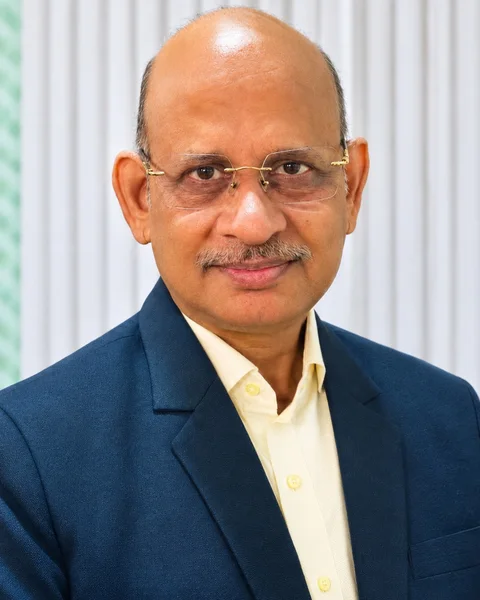
Santosh Prajapati founded Jyoti Hydrotech Pvt. Ltd. in Surat in 1993 and leads the company as Managing Director. Under his leadership Jyoti has designed, built and run water and wastewater treatment plants for Indian industry – ETP, STP, RO, ZLD and more – and exported systems to eight countries.