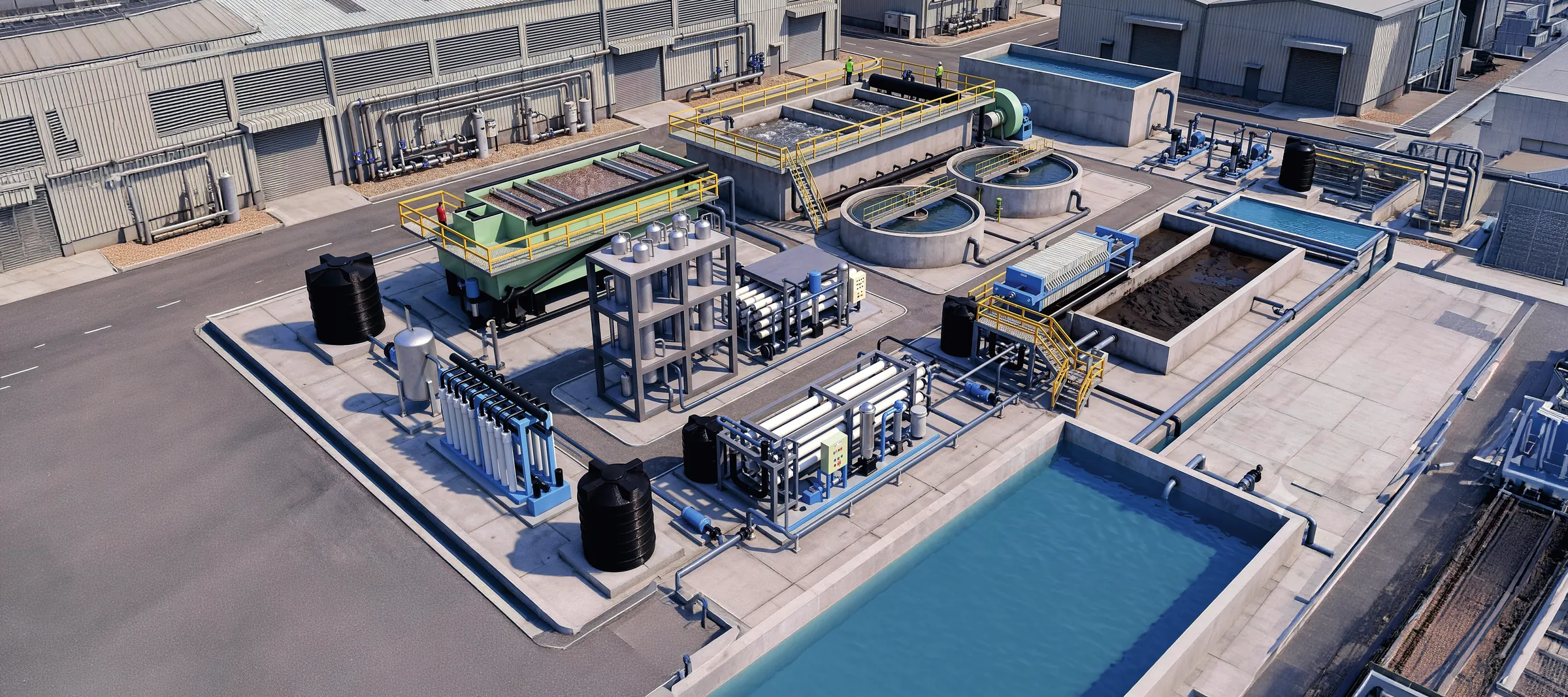
MBBR vs SBR vs MBR vs ASP: Which Biological Treatment Is Right for Your STP or ETP?
Four technologies dominate biological treatment in India. Here is how each one works, where it wins, where it struggles – and how to pick the right one for your flow, space and reuse goals.
 Santosh Prajapati · Managing Director
· 6 min read
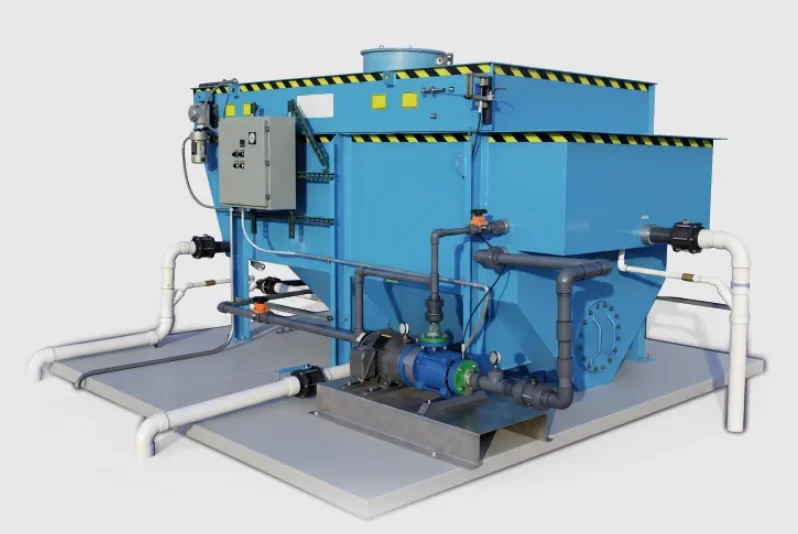
All four use bacteria to remove BOD, COD and nutrients; they differ in how they hold the biomass and separate it from treated water. ASP keeps sludge in suspension and needs a large clarifier. MBBR grows biofilm on floating plastic carriers – compact and tolerant of load swings, easy to retrofit. SBR does every step in one tank in timed cycles – flexible but needs good automation. MBR replaces the clarifier with membranes – the best water quality and smallest footprint, at higher power and maintenance cost.
MBBR vs SBR vs MBR vs ASP: the comparison at a glance
| ASP | MBBR | SBR | MBR | |
|---|---|---|---|---|
| How biomass is held | Suspended flocs | Biofilm on moving carriers | Suspended flocs, one tank | Suspended flocs + membranes |
| Solids separation | Secondary clarifier | Clarifier, lamella or tube settler | Settling phase in the same tank | Membrane (UF/MF) – no clarifier |
| Treated water | Meets basic discharge norms | Good; polish for reuse | Good; polish for reuse | Reuse-grade, very low TSS |
| Best for | Large plants with space | Compact plants, upgrades, variable loads | Variable flows, nutrient removal | Tight sites, high reuse, strict norms |
How the four typically rank against each other (5 dots = most favourable):
| Criterion | ASP | MBBR | SBR | MBR |
|---|---|---|---|---|
| Compact footprint | ||||
| Treated-water quality | ||||
| Low power use | ||||
| Simple to operate | ||||
| Copes with load swings | ||||
| Low capital cost |
This is a relative ranking for a typical small-to-medium plant, based on engineering experience; actual performance and cost depend on design, load and site. Published comparisons agree on the broad pattern – MBR gives the highest-quality effluent but needs more energy and maintenance, while MBBR suits compact spaces and SBR tends to need more area.
How does a conventional activated sludge process (ASP) work?
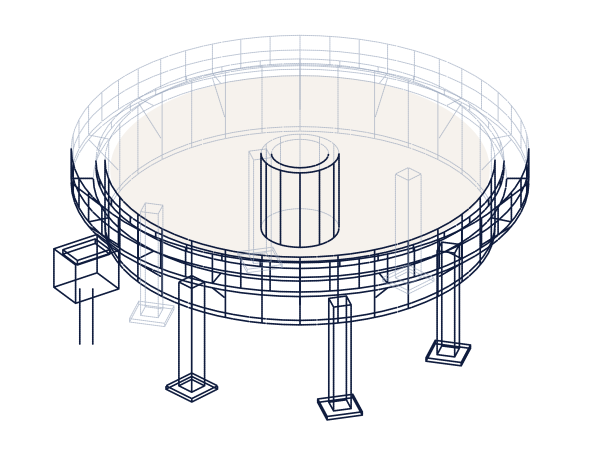
Effluent is aerated in a large tank with suspended bacteria (the mixed liquor). The mixture flows to a secondary clarifier, where sludge settles; most is returned to the aeration tank and the surplus is wasted. ASP is proven and cheap to build where land is available, but it needs room, careful control of MLSS and DO, and it reacts badly to shock loads and poor-settling sludge.
What is MBBR and why is it so popular?
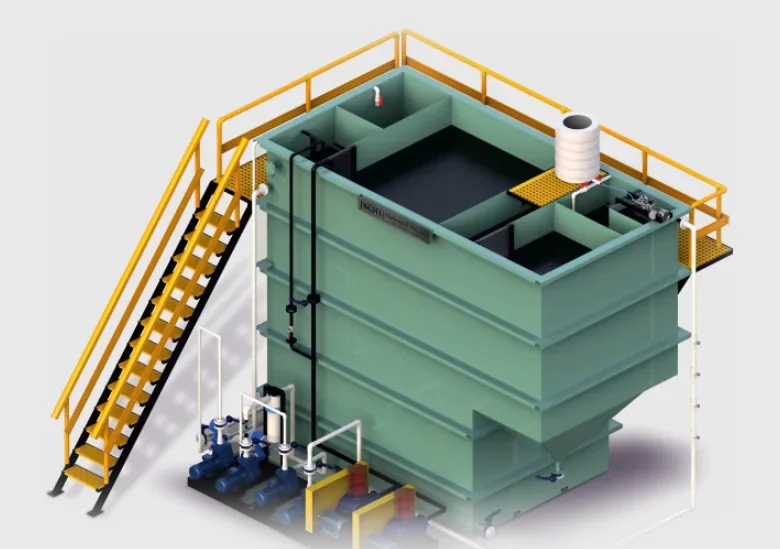
In a moving bed biofilm reactor, thousands of small plastic carriers move freely in the aerated tank. Bacteria grow as a biofilm on the protected inner surfaces, so the tank holds far more biomass per cubic metre than ASP. There is no sludge recycle to manage, and the biofilm rides out load swings well.
- Compact – a smaller tank for the same load.
- Easy retrofit – adding carriers to an existing aeration tank raises capacity in the same footprint.
- Still needs solids separation after the reactor – a clarifier, lamella or tube settler.
- See Jyoti’s MBBR systems and the lamella clarifier often paired with them.
How does an SBR work?
A sequencing batch reactor treats wastewater in one tank through a timed cycle: fill, react (aerate), settle, decant and idle. Because settling happens in the same tank, there is no separate clarifier, and cycle times can be changed to target nitrogen and phosphorus removal.
The catch is control. An SBR depends on level sensors, valves, decanters and a well-programmed PLC; a failed sensor or wrong timing shows up straight away in the outlet. Plants with continuous inflow need two or more tanks or a buffer tank.
What makes MBR different?
A membrane bioreactor combines an activated sludge tank with ultrafiltration or microfiltration membranes that physically hold back bacteria and solids. Because the membrane – not gravity – separates the water, the plant can run at a much higher MLSS in a smaller tank and needs no secondary clarifier or tertiary filter.
- Clear, low-TSS permeate that suits reuse and is a good feed for RO.
- Smallest footprint – ideal for basements, hotels, hospitals and space-starved factories.
- Higher power (membrane air scouring) and regular chemical cleaning; membranes need replacement over time.
- Jyoti builds MBR plants and supplies MBR membranes.
What treated-water quality do STP norms require in India?
For sewage treatment plants, the MoEFCC notification of October 2017 set limits that vary by city size. In April 2019 the National Green Tribunal rejected that notification and ordered stricter norms based on CPCB’s 2015 draft. Which numbers apply to your plant is set by your consent, so confirm with your State Pollution Control Board.
| Parameter | MoEFCC notification, Oct 2017 | Stricter norms ordered by NGT, 2019 |
|---|---|---|
| BOD (mg/L) | 30 (20 in metro cities) | 10 |
| COD (mg/L) | No limit | 50 |
| TSS (mg/L) | 100 (50 in metro cities) | 20 |
| Total nitrogen (mg/L) | No limit | 10 |
| Ammoniacal nitrogen (mg/L) | No limit | 5 |
| Faecal coliform (MPN/100 mL) | Below 1,000 | Below 100 (desirable) |
Compiled from NGT records and reporting on the 2019 order. Industrial ETPs follow the general or industry-specific standards and their own consent conditions instead.
Which one should you choose? A quick decision guide
| If your situation is… | Consider |
|---|---|
| Plenty of land, steady load, lowest build cost | ASP |
| Limited space or an existing ASP that needs more capacity | MBBR |
| Strongly variable flow, nutrient removal, good automation support | SBR |
| Very tight site, high-quality reuse or the strictest norms | MBR |
| Water must go on to RO or ZLD | MBR, or MBBR with UF |
| Small residential or commercial building | Packaged MBBR or MBR STP |
For industrial effluent the biology sits after a primary physico-chemical stage, and very strong effluents may need anaerobic treatment first. Toxic or saline streams can inhibit any of the four – a treatability study shows what will work.
Can an old ASP be upgraded instead of rebuilt?
Often, yes. Adding MBBR carriers to the existing aeration tank (sometimes called IFAS when suspended sludge is kept too), adding a lamella settler, or adding UF after the clarifier can raise capacity or quality without new civil work. Jyoti’s plant audit and upgrade service checks what your tanks can deliver.
Key takeaways
- ASP: proven and low-cost, but needs space and careful control.
- MBBR: compact, tolerant of load swings, ideal for retrofits; still needs a settler.
- SBR: one tank, flexible cycles, strong on nutrients – depends on good automation.
- MBR: best water quality and smallest footprint, at higher power and membrane upkeep.
- Choose on space, reuse goals, norms in your consent and the skills available to run it.
Frequently asked questions
What is the full form of MBBR, SBR and MBR?
MBBR is Moving Bed Biofilm Reactor, SBR is Sequencing Batch Reactor and MBR is Membrane Bioreactor. ASP stands for Activated Sludge Process.
Which STP technology is best for apartments and commercial buildings?
Where space is tight, packaged MBBR or MBR plants are the usual choice. MBR gives the best water for flushing and gardening reuse; MBBR costs less to build and run.
Is MBBR better than SBR?
Neither is better everywhere. MBBR is simpler to operate and easy to retrofit; SBR saves a clarifier and is strong on nutrient removal but depends on reliable automation.
Does an MBR need a secondary clarifier?
No. The membranes separate the treated water from the sludge, so MBR needs no secondary clarifier or tertiary sand filter.
Which technology has the lowest operating cost?
ASP and MBBR usually have lower running costs than MBR, which needs extra power for membrane air scouring and periodic membrane cleaning. Actual cost depends on the design and load.
Can an existing activated sludge plant be converted to MBBR?
Often yes – carriers can be added to the existing aeration tank with retaining screens and upgraded aeration, increasing capacity without new tanks.
Which biological treatment is best for water reuse?
MBR gives the most consistent reuse-grade water and is a good feed for RO. MBBR or SBR can also be used with tertiary filtration, UF and disinfection.
What are the STP discharge norms in India?
The 2017 MoEFCC notification set BOD 30 mg/L (20 in metros) and TSS 100 mg/L (50 in metros); in 2019 the NGT ordered stricter norms such as BOD 10, COD 50 and TSS 20 mg/L. Your consent conditions decide what applies.

Santosh Prajapati founded Jyoti Hydrotech Pvt. Ltd. in Surat in 1993 and leads the company as Managing Director. Under his leadership Jyoti has designed, built and run water and wastewater treatment plants for Indian industry – ETP, STP, RO, ZLD and more – and exported systems to eight countries.