Textile Effluent Treatment: Process, Colour & COD Removal and ZLD for Dyeing Units
Textile wastewater changes with every dye lot. This guide explains what is in it, which norms apply, and how a well-designed ETP removes colour, COD and solids – and when reuse or ZLD makes sense.
 Santosh Prajapati · Managing Director
· 7 min read
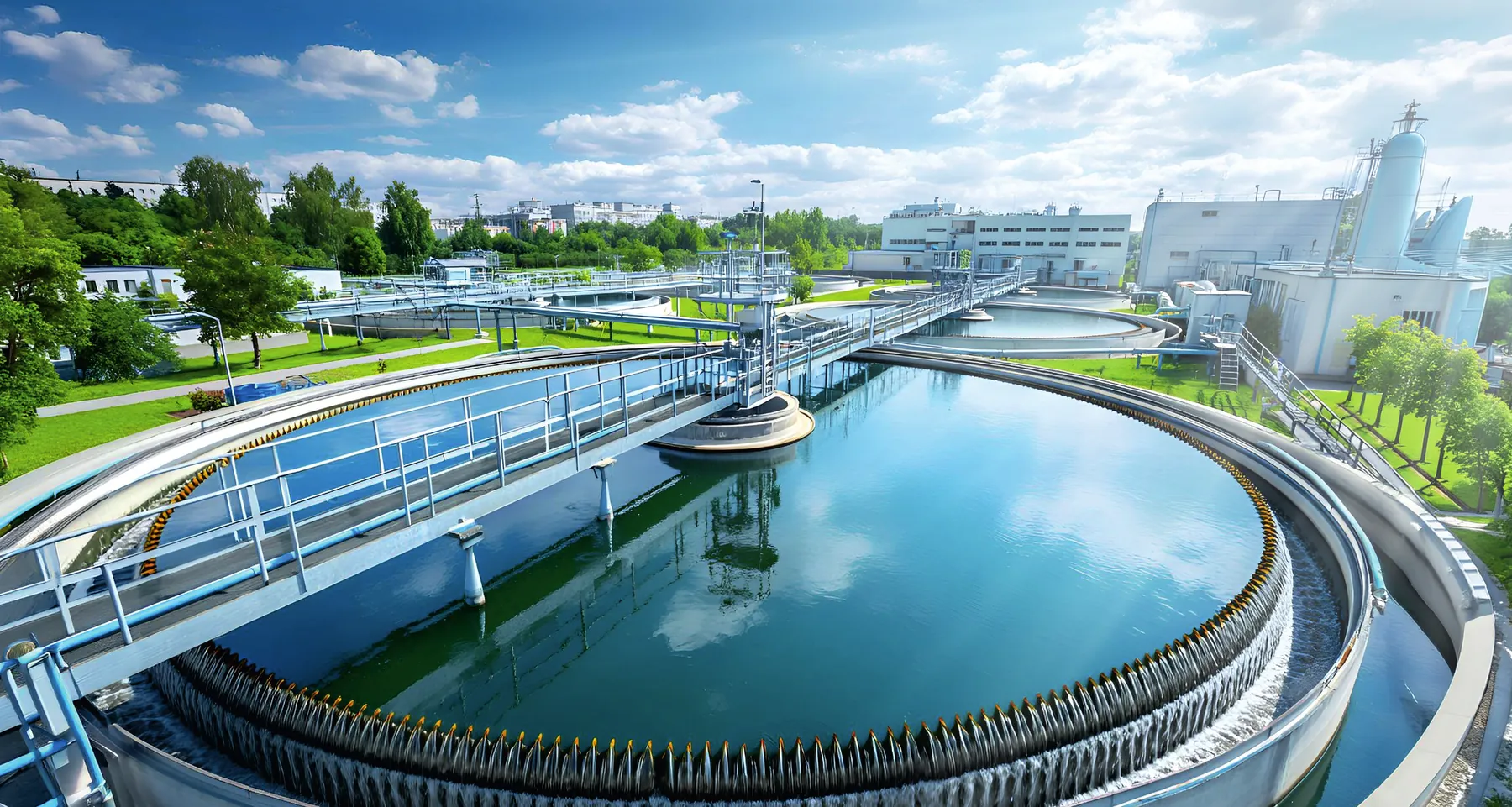
Textile effluent is treated in stages: screening and lint removal, equalisation with cooling and pH correction, chemical coagulation and flocculation to remove colour and suspended solids, biological treatment (activated sludge or MBBR) to cut BOD and COD, then tertiary filtration. Where water must be reused or ZLD is required, UF, RO and an evaporator follow, because biology and chemistry do not remove dissolved salts (TDS).
Why is textile wastewater so hard to treat?
A textile processing house uses water in almost every wet step, and each step adds a different load. The result is effluent that is hot, often strongly alkaline, coloured, high in COD and – in reactive dyeing – high in dissolved salts. It also changes from batch to batch as shades, fabrics and recipes change, so a plant that works on Monday can struggle on Thursday.
Three features decide the design. Colour: many dyes are built to resist fading, so microbes break them down only partly. Low biodegradability: sizing agents, auxiliaries and dyes give a COD that is high compared with BOD. TDS: salt and alkali used to fix dyes stay dissolved through the whole ETP.
| Process step | What it adds to the effluent | Typical concern |
|---|---|---|
| Desizing | Starch, PVA and other sizing agents | High BOD and COD |
| Scouring | Caustic, waxes, oils, surfactants | High pH, COD, foam |
| Bleaching | Peroxide or hypochlorite, stabilisers | Residual oxidants, AOX |
| Mercerising | Concentrated caustic soda | Very high pH and alkalinity |
| Dyeing | Unfixed dye, salt, soda ash, auxiliaries | Colour, TDS, COD |
| Printing | Pigments, thickeners, urea | COD, ammonia, sticky solids |
| Finishing | Softeners, resins, finishing chemicals | COD, foam |
General profile – the mix at your unit depends on fibre, dye class and machines. A sampling campaign across shifts is the starting point of every Jyoti design.
What discharge norms apply to textile effluent in India?
Textile units must meet the industry-specific standards notified under the Environment (Protection) Rules, plus any stricter limits written into their consent from the State Pollution Control Board. The core textile limits are:
| Parameter | Limit (mg/L, except pH) |
|---|---|
| pH | 5.5 – 9.0 |
| Total suspended solids | 100 |
| BOD (3 days at 27 °C) | 30 |
| COD | 250 |
Where treated effluent goes to a municipal sewer that leads to a terminal treatment plant, BOD may be relaxed to 100 mg/L and COD to 400 mg/L. Effluent quantity is also capped per kilogram of product: 100 L/kg for composite cotton, 250 L/kg for composite woollen and 80 L/kg for textile processing units. Source: Government of India reply in the Lok Sabha listing the standards for textile effluent.
What is the step-by-step textile ETP process?
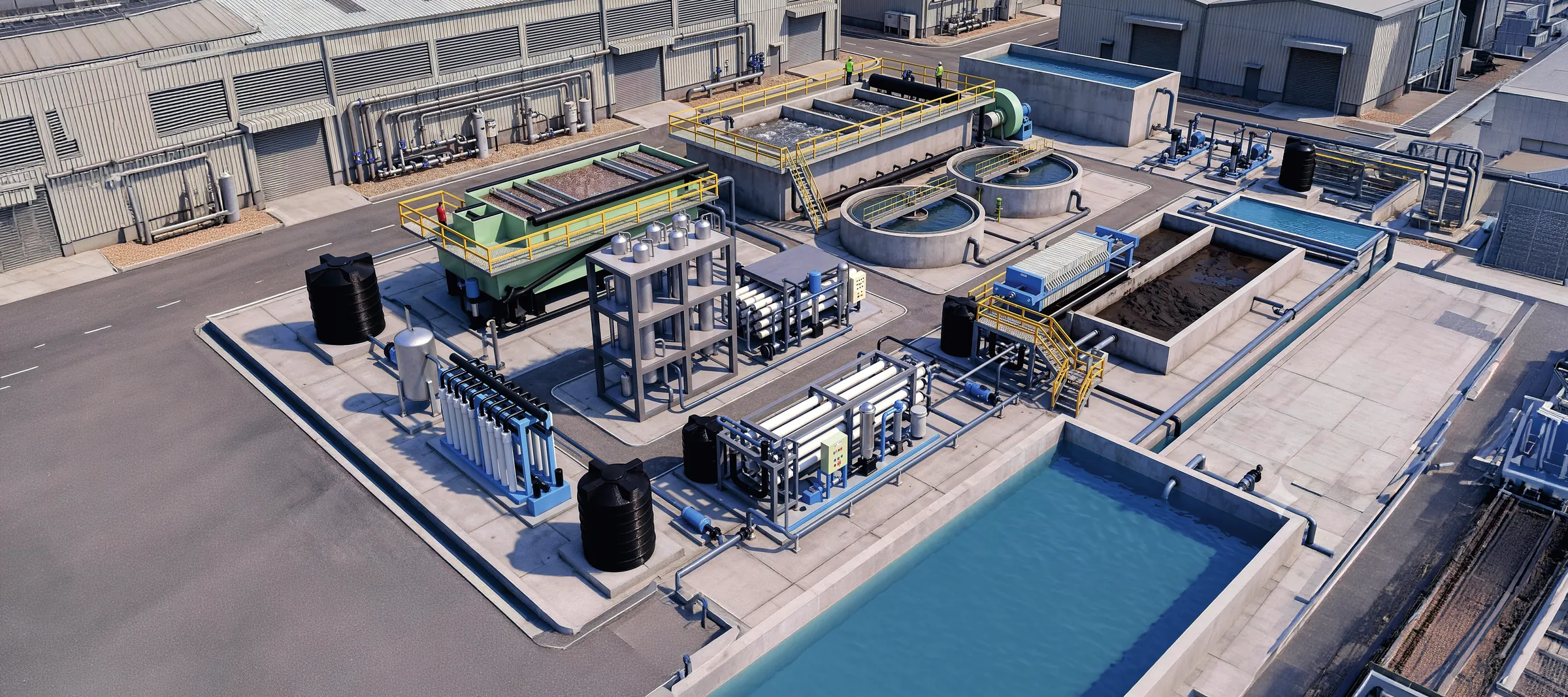
A typical textile ETP built by Jyoti follows this sequence. Each stage removes something the next stage cannot handle well.
- Screening & lint removalBar screen and rotary drum screen stop fibres, lint and rags that would choke pumps.
- Equalisation & coolingA mixed, aerated tank evens out batch dumps; hot effluent is cooled before biology.
- NeutralisationpH is brought into range – alkaline textile effluent usually needs acid or CO₂.
- Coagulation & flocculationCoagulant and polyelectrolyte pull colour and fine solids into flocs.
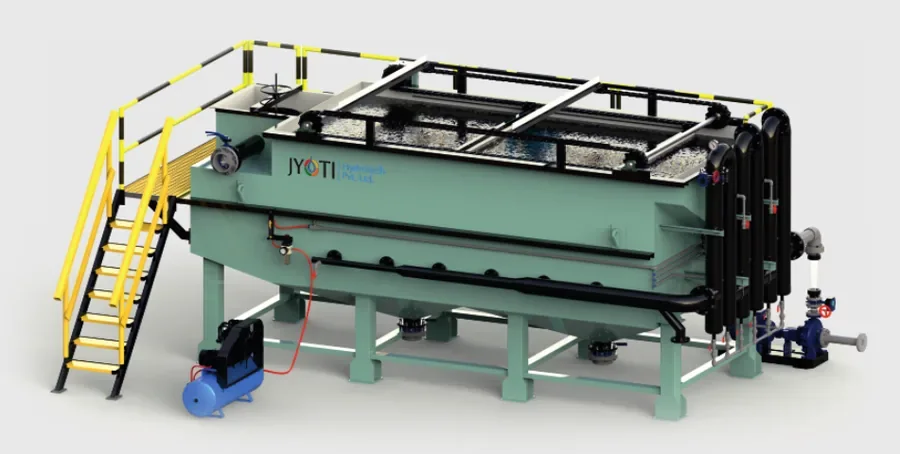
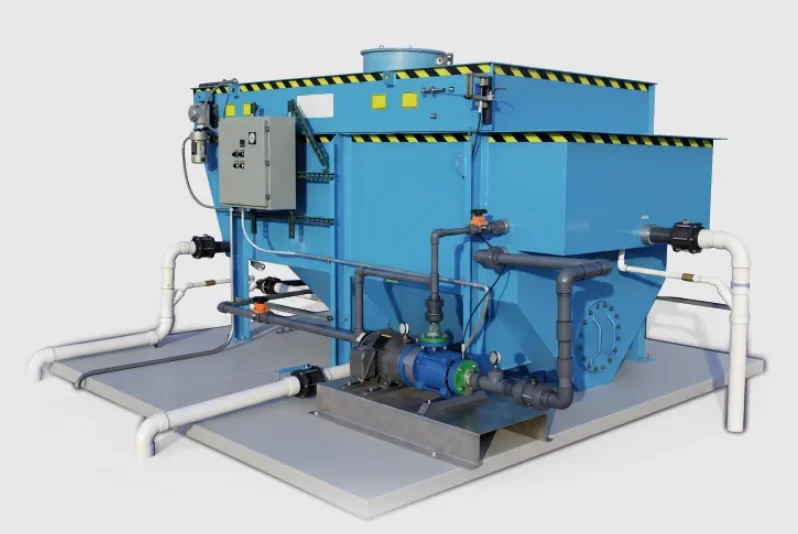
- Primary clarifier or DAFFlocs are settled or floated off as chemical sludge.
- Biological treatmentActivated sludge or MBBR removes biodegradable BOD and COD.
- Secondary clarifierBiomass settles and returns to the aeration tank.
- Tertiary polishingPressure sand / multi-grade filter and activated carbon polish TSS, colour and COD.
- Reuse or ZLD (optional)UF and RO recover water; RO reject goes to an evaporator for ZLD.
- Sludge handlingThickener and screw press or filter press dewater sludge for authorised disposal.
See how the same stages connect in our animated ETP-to-ZLD process flow.
How is colour removed from textile effluent?
Most colour is removed chemically, before biology. The right chemistry depends on the dye class running that day – reactive, disperse, vat, sulphur or pigment – so the dose is set by a jar test, not by habit.
| Method | Where it fits | What to watch |
|---|---|---|
| Coagulation with a colour-removal chemical | Main colour removal in primary treatment | Re-check the dose when the shade mix changes |
| Biological treatment | Removes the biodegradable part of dyes and auxiliaries | Colour often passes through untouched |
| Activated carbon | Final polishing of residual colour and COD | Carbon saturates and must be replaced |
| Oxidation (ozone, advanced oxidation) | Stubborn colour and non-biodegradable COD | Higher running cost; needs good control |
| Membranes (UF + RO) | When water is recovered for reuse | Needs stable, well-filtered feed |
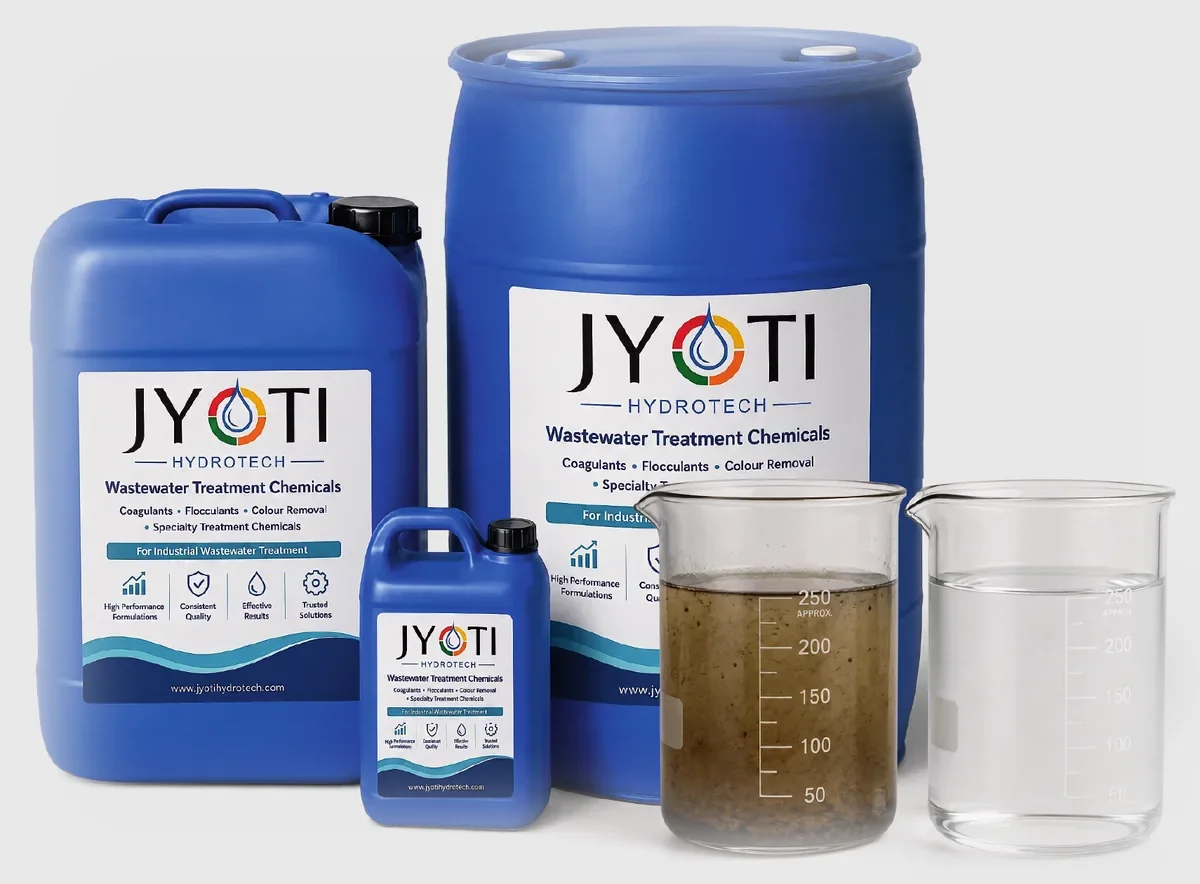
Jyoti’s textile range includes the colour-removal chemicals JC-706 and JC-720-H and the textile coagulant JC-716 – see the wastewater treatment chemicals. For the basics of dosing, read Coagulant vs flocculant and the jar test.
Can textile effluent be reused without a large conventional ETP?
For units short on space, Jyoti’s EDR (Effluent Direct Reuse) system treats coloured, high-solids effluent in a compact, automated smart-screen unit with little primary treatment. The results below were published by Jyoti Hydrotech for a textile effluent.
Each pair of bars is scaled to its own inlet value. TDS barely changes – dissolved salts need RO if the water must be low in TDS.
How do textile units deal with TDS and zero liquid discharge?
Salt does not settle, float or get eaten by bacteria. Once the ETP has removed colour, solids and COD, the dissolved salts are still there. If the treated water is reused in dyeing, salts build up; if the unit falls under a ZLD condition, salts must leave the site as solids.
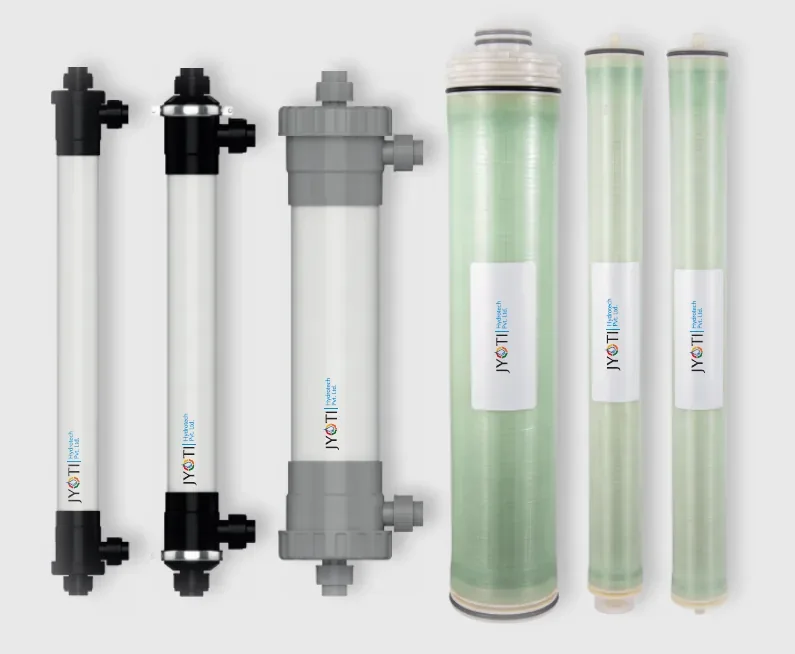
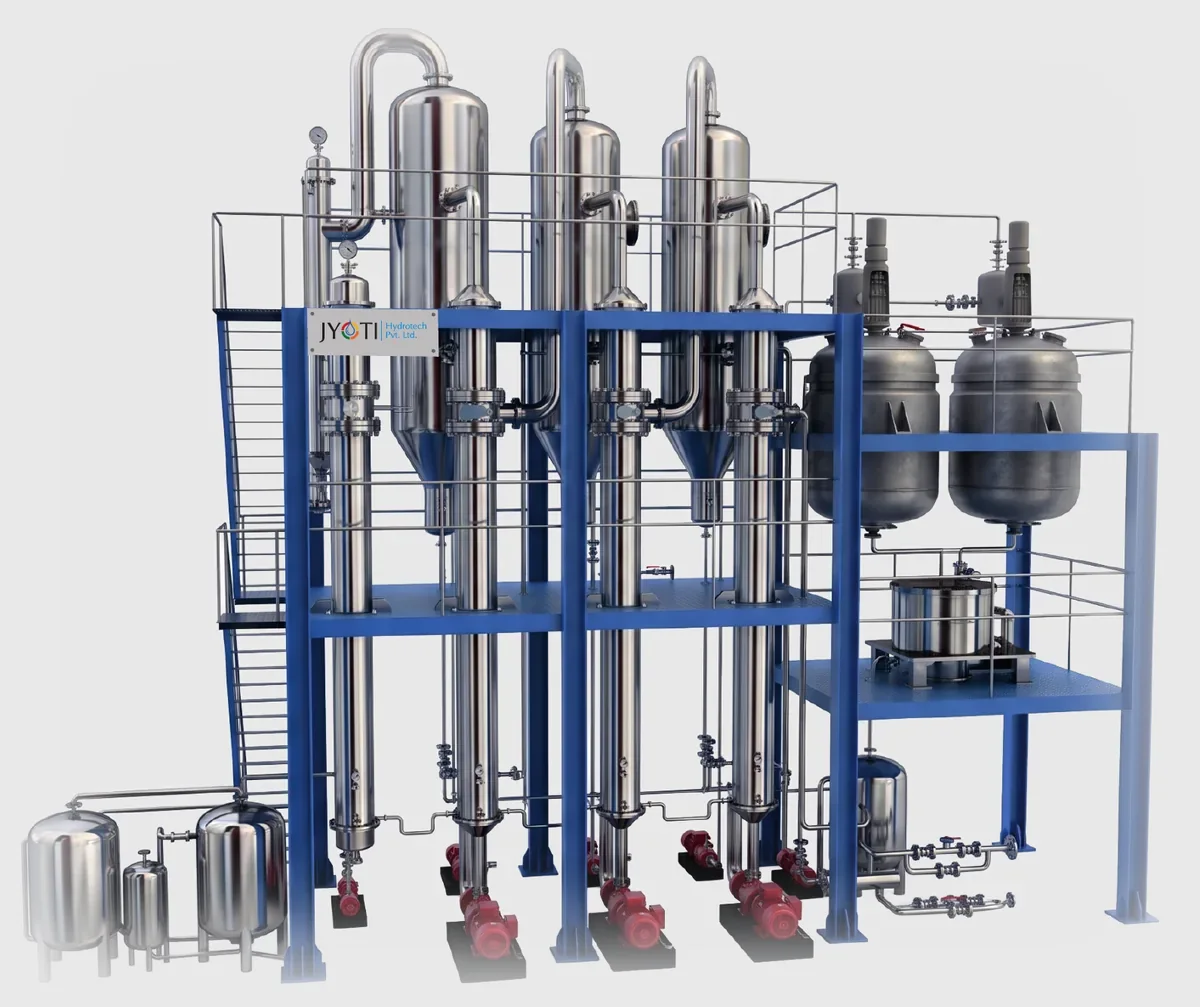
The usual route is UF to protect the membranes, RO to recover clean permeate, a second high-recovery RO on the reject, and a multiple-effect evaporator (MEE) with a dryer or centrifuge for the final brine. CPCB’s indicative guidelines on the techno-economic feasibility of ZLD single out textile and dyeing among the sectors that need special emphasis.
- Segregate streams – dye-bath drops are high in salt; wash water is much weaker. Treating them separately shrinks the expensive ZLD section.
- Recover what you can – RO permeate goes back to processing; in some schemes recovered brine can be reused in dyeing.
- Size the evaporator on real data – read our ZLD guide for what drives running cost.
How can a dyeing unit reduce ETP load and cost?
The cheapest litre to treat is the one you never discharge. Practical steps that reduce both water use and ETP load:
- Install water meters on each machine range and track litres per kg of fabric.
- Use counter-current washing and reuse lightly soiled rinse water.
- Recover caustic from mercerising instead of sending it to drain.
- Prefer low-liquor-ratio machines and right-first-time dyeing to cut re-dyes.
- Keep dye and chemical spills out of floor drains – housekeeping lowers shock loads.
- Cool and equalise before biology; hot, spiky effluent kills biomass.
What should a textile unit ask an ETP supplier?
- Has the design been based on sampling of your effluent across shifts and shades?
- Has a treatability study confirmed colour and COD removal with the proposed chemistry?
- What outlet quality is guaranteed – for discharge, and for reuse if needed?
- How will the plant handle hot, high-pH batch dumps?
- What will chemicals, power and sludge cost per m³?
- Who supplies chemicals, operates the plant and supports it after commissioning?
Jyoti Hydrotech has been designing ETPs from its base in Surat’s Sachin GIDC since 1993, with chemicals, equipment and O&M from one source. Start with a treatability study.
Key takeaways
- Textile effluent is hot, alkaline, coloured, high in COD and often high in TDS – and it changes with every batch.
- Core textile limits: pH 5.5–9.0, TSS 100, BOD 30 and COD 250 mg/L – your consent may be stricter.
- Colour is removed mainly by chemistry before biology; set the dose with a jar test.
- ETPs do not remove TDS – reuse and ZLD need UF, RO and an evaporator.
- Stream segregation and water-saving in the dye house cut ETP cost the most.
Frequently asked questions
What is the COD limit for textile effluent in India?
The general textile standard is 250 mg/L COD, with BOD 30 mg/L, TSS 100 mg/L and pH 5.5–9.0. When discharging to a sewer leading to a terminal plant, COD may be relaxed to 400 mg/L. Your consent conditions may be stricter.
Why is textile effluent coloured?
Not all dye fixes on the fabric. The unfixed dye – along with auxiliaries – leaves with the dye bath and rinse water, and many dyes are designed to resist breakdown.
Can biological treatment remove colour from textile effluent?
Only partly. Biology removes the biodegradable part of the load, but many dyes pass through. Colour is mainly removed by coagulation with colour-removal chemicals, with carbon, oxidation or membranes for polishing.
Which chemical is best for colour removal in textile effluent?
There is no single best chemical – it depends on the dye class and pH. A jar test on fresh effluent compares colour-removal chemicals, coagulants and doses and picks the lowest-cost option that meets the target.
Does a textile ETP remove TDS?
No. Conventional physico-chemical and biological treatment leaves dissolved salts in the water. TDS is removed with RO, and the RO reject is evaporated where ZLD is required.
Is ZLD mandatory for textile units in India?
It depends on the unit’s location and consent. ZLD is imposed through consent conditions for many textile and dyeing clusters, and CPCB’s indicative ZLD guidelines give textile and dyeing special emphasis. Check your consent order.
How much water can a textile unit discharge?
The textile standards cap effluent at 100 L per kg of product for composite cotton mills, 250 L/kg for composite woollen mills and 80 L/kg for textile processing units.
What is the best ETP technology for a textile processing house?
Most use a physico-chemical stage for colour and solids followed by activated sludge or MBBR, then tertiary filtration. Space-limited units can consider compact systems such as Jyoti EDR; units that must reuse water add UF and RO.
Santosh Prajapati founded Jyoti Hydrotech Pvt. Ltd. in Surat in 1993 and leads the company as Managing Director. Under his leadership Jyoti has designed, built and run water and wastewater treatment plants for Indian industry – ETP, STP, RO, ZLD and more – and exported systems to eight countries.