Zero Liquid Discharge (ZLD) Explained: How It Works and When Your Plant Needs It
From membranes to evaporators: how a ZLD plant closes the water loop, and how to keep its running cost under control.
 Santosh Prajapati · Managing Director
· 3 min read
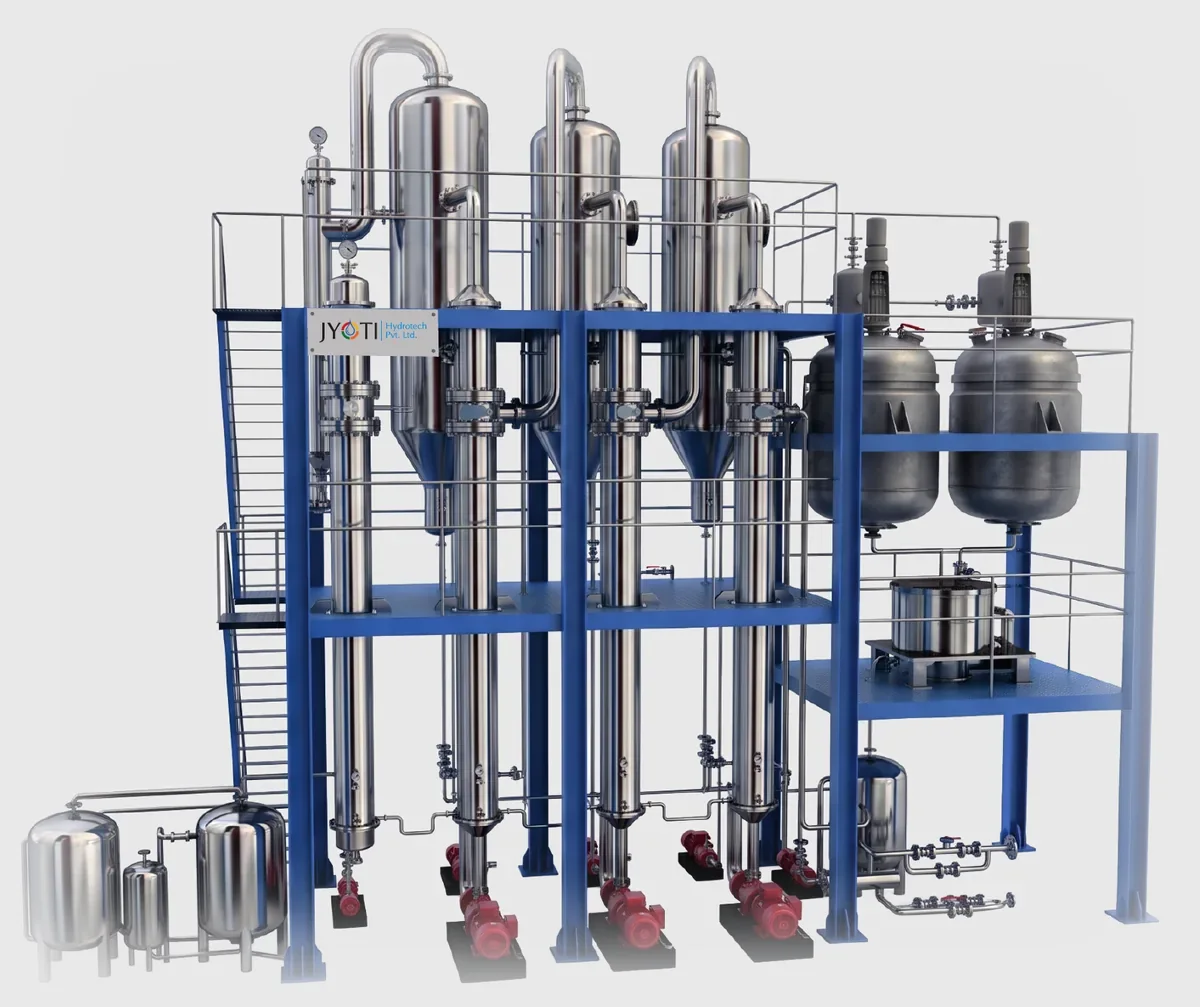
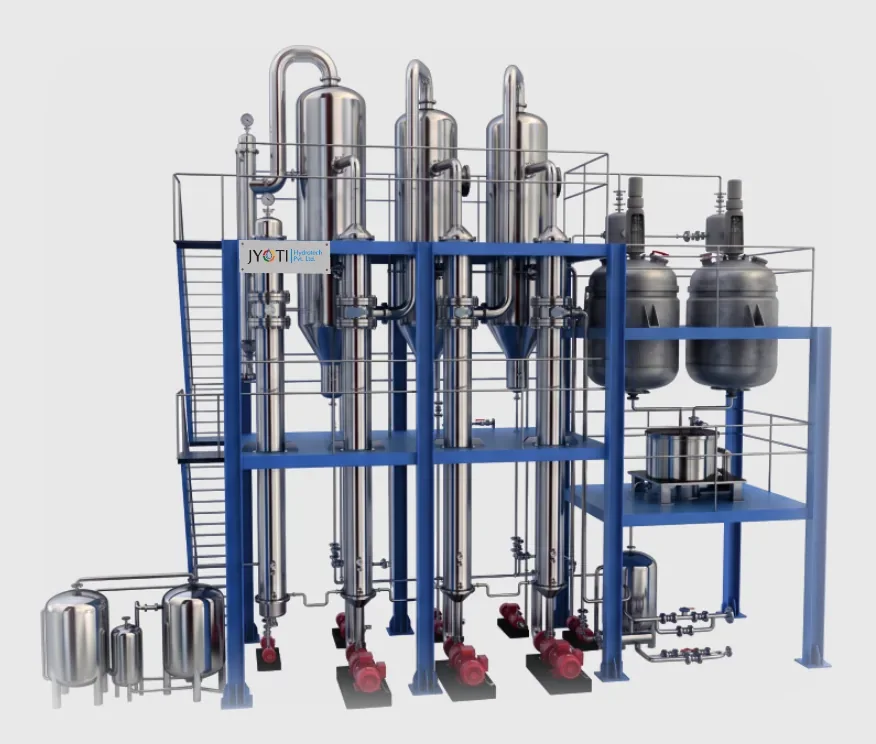
Zero liquid discharge (ZLD) is a treatment approach in which no liquid effluent leaves the site. Effluent is treated, most of the water is recovered through UF and RO for reuse, and the remaining concentrated reject is evaporated – usually in a multiple effect evaporator (MEE) followed by drying – so only reusable water and solid salt remain.
How does a ZLD system work?
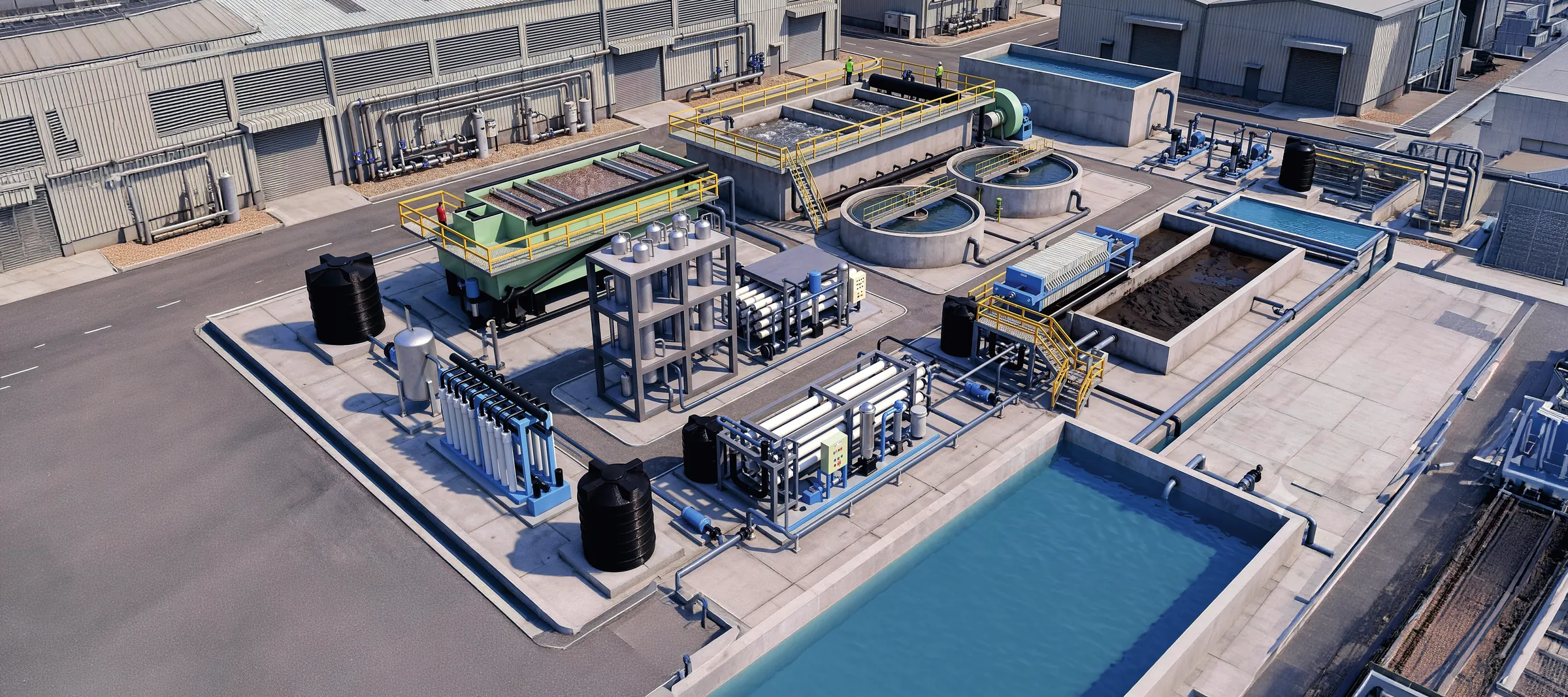
A typical industrial ZLD scheme follows this train:
- ETP – primary and biological treatment remove solids, colour and organics (ETP).
- Tertiary treatment – multi grade and carbon filters and ultrafiltration prepare a clean, stable feed for the membranes.
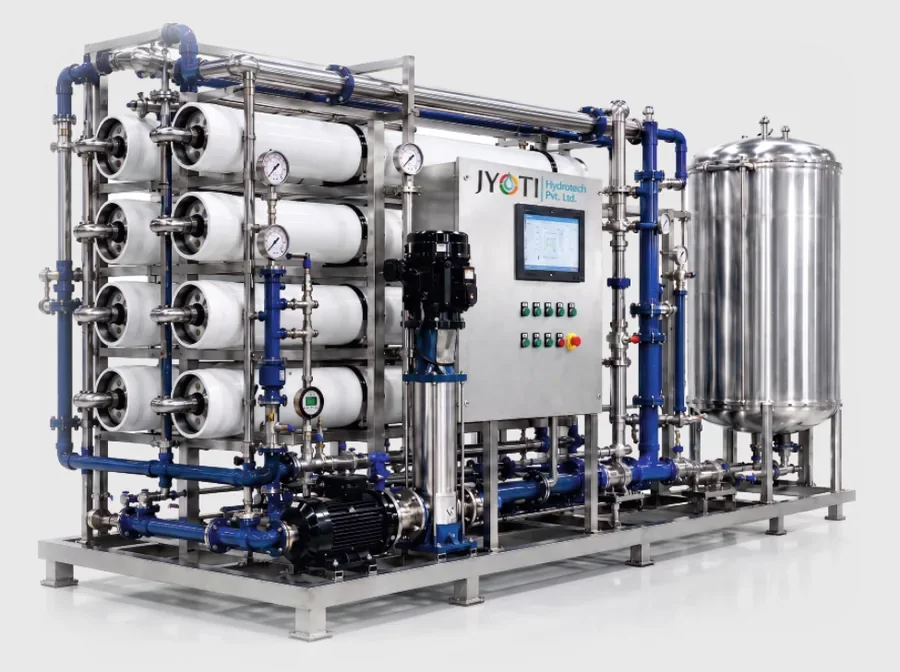
- RO plant – reverse osmosis recovers most of the water as low-TDS permeate for reuse.
- Reject RO – a second, high-recovery RO concentrates the reject further.
- MEE – a multiple effect evaporator uses steam to evaporate the concentrate, reusing vapour across its effects and recovering condensate.
- Drying / crystallisation – an ATFD, crystalliser or centrifuge turns the final slurry into solid salt for authorised disposal.
See the whole scheme animated on our process flow page.
Why use membranes before the evaporator?
Evaporating water takes a lot of thermal energy, while membranes separate water from salts at a fraction of that energy. So the economics of ZLD depend on sending as little water as possible to the MEE: every cubic metre recovered by RO is a cubic metre the evaporator does not have to boil.
That is why most ZLD plants are designed around high-recovery membranes, with the evaporator sized only for the final concentrated stream.
Which industries need ZLD?
ZLD is most common where effluent is high in salts or hard to treat, or where water is scarce:
- Textile dyeing and processing clusters
- Dye and dye-intermediate, and chemical manufacturing
- Pharmaceutical and bulk-drug units
- Distillery and sugar
- Any unit whose consent to operate requires zero discharge, or whose site has no permitted discharge point
What drives the running cost of a ZLD plant?
| Cost driver | Why it matters | How to control it |
|---|---|---|
| Steam for the MEE | Largest energy cost in most ZLD plants | Maximise RO recovery; choose the right number of effects |
| Power | Blowers, high-pressure pumps, vacuum systems | Efficient pumps, VFDs, right-sized blowers |
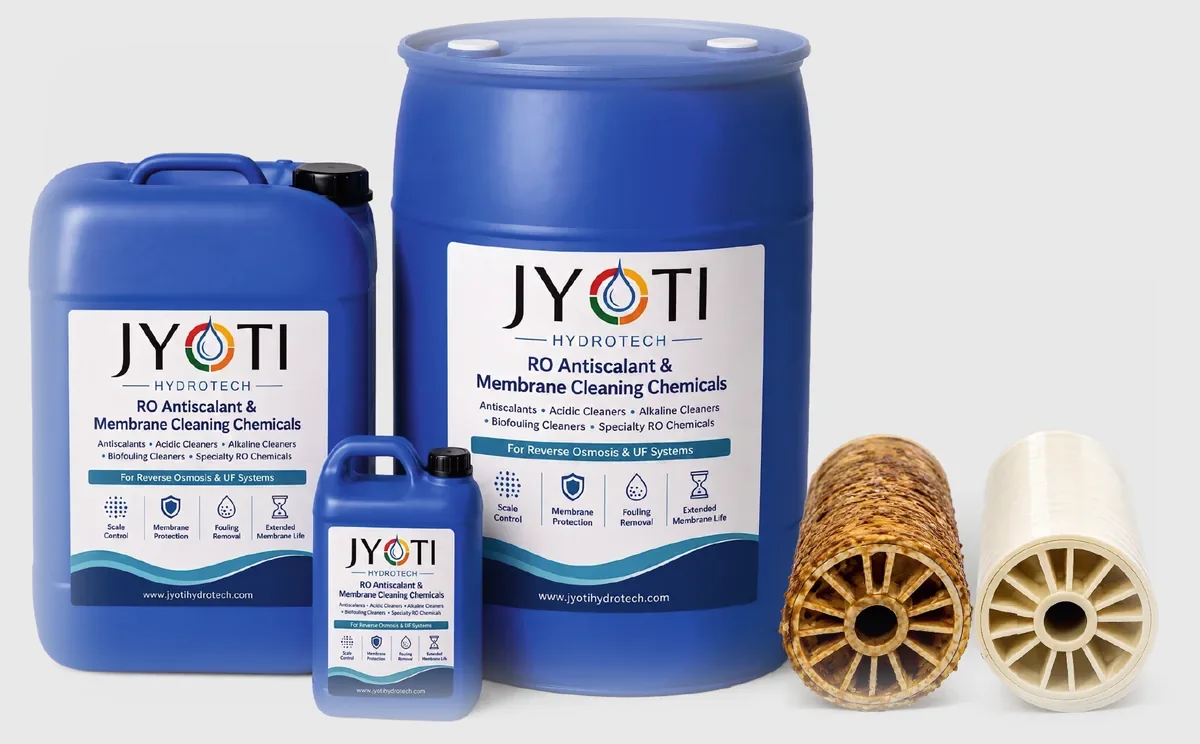
| Chemicals | Antiscalants, cleaners, ETP chemistry | Dose by analysis; use MEE antiscalant and descalant |
| Membrane replacement | Fouling shortens RO and UF life | Stable pre-treatment and timely cleaning |
| Salt disposal | Solid waste goes to authorised disposal | Segregate streams; explore salt recovery |
How do you make ZLD feasible?
Before investing in a large thermal stage, work through these steps – they are the same ones Jyoti uses in its ZLD feasibility studies:
- Identify opportunities to segregate wastewater streams.
- Establish shock-load characteristics and the carrying capacity of each treatment unit.
- Reduce organic and inorganic load on the ETP and improve its performance.
- Stabilise and reduce biological sludge; use bio-augmentation during upsets.
- Characterise flows, chemistry and loading patterns, and run bench-scale studies.
- Prepare a conceptual ZLD design and a techno-economic feasibility report.
What are the common mistakes in ZLD projects?
- Sizing the MEE before the ETP and RO are performing – the evaporator then inherits every upstream problem.
- Ignoring organics and silica in the RO reject, which cause scaling and foaming in the evaporator.
- No plan for salt handling and disposal.
- Treating all streams together when a small, strong stream could be handled separately.
Planning a ZLD project? Start with a treatability and feasibility study or read about Jyoti ZLD systems.
Key takeaways
- ZLD = treat, recover water with UF + RO, evaporate the reject, dispose of solid salt.
- Membranes recover water cheaply; the evaporator should only see the final concentrate.
- Steam, chemicals and membrane life drive running cost.
- Fix the ETP and segregate streams before sizing the thermal stage.
Frequently asked questions
What is the full form of ZLD?
ZLD stands for Zero Liquid Discharge – no liquid effluent leaves the plant; water is recovered and the remaining salts leave as solids.
Is ZLD mandatory in India?
Not for every unit. It depends on the industry, the location and the conditions in each unit’s consent from the State Pollution Control Board. Check your own consent.
What is an MEE in ZLD?
An MEE (multiple effect evaporator) evaporates the concentrated RO reject using steam, reusing the vapour of one effect to heat the next to save energy.
Can ZLD water be reused?
Yes. RO permeate and MEE condensate are reused in process, cooling towers and, after polishing, boilers.
Santosh Prajapati founded Jyoti Hydrotech Pvt. Ltd. in Surat in 1993 and leads the company as Managing Director. Under his leadership Jyoti has designed, built and run water and wastewater treatment plants for Indian industry – ETP, STP, RO, ZLD and more – and exported systems to eight countries.