Reverse Osmosis Plant
Membrane desalting for process, boiler-feed and recycled water
Reverse Osmosis is a pressure-driven membrane process that removes dissolved salts, high TDS, minerals and other impurities from water. The system lets purified water pass through the membrane while retaining unwanted contaminants on the reject side.
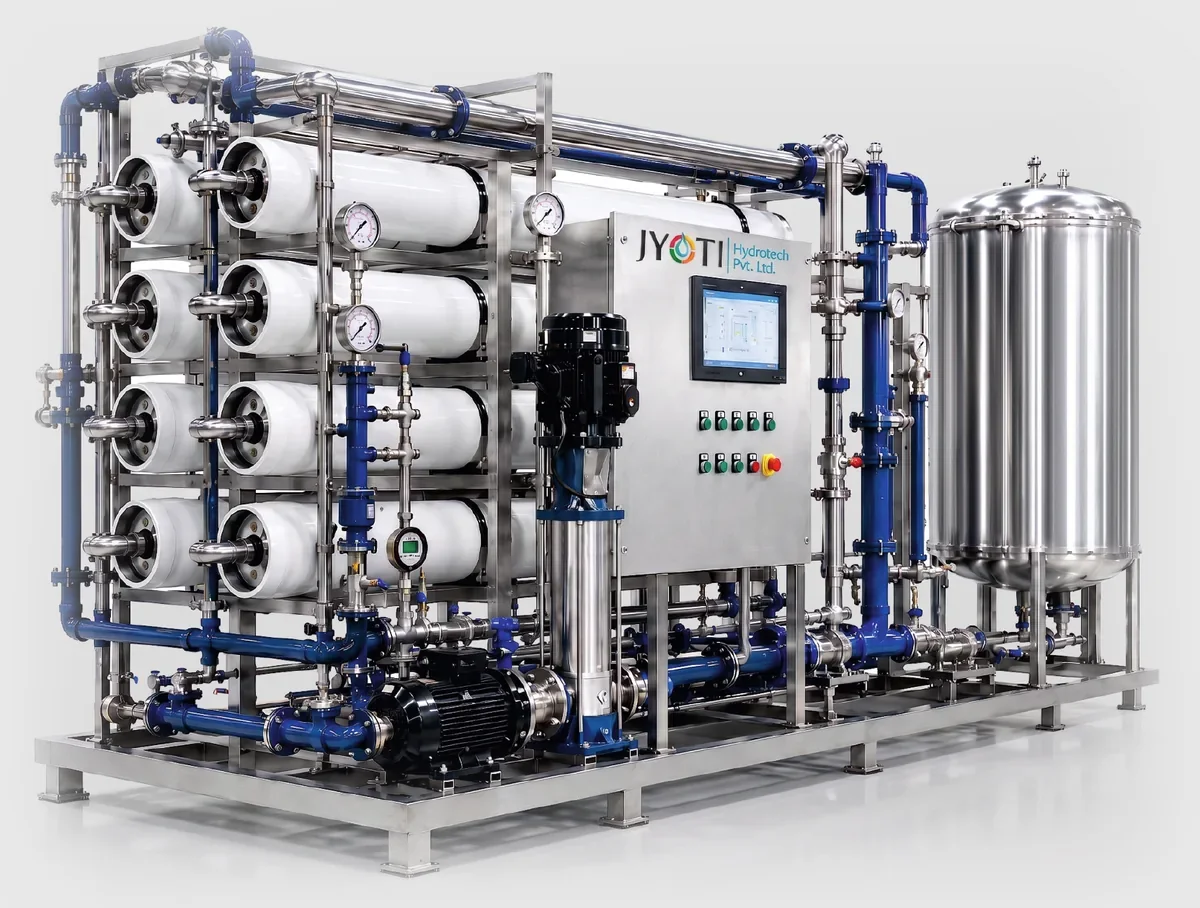
Reverse Osmosis (RO) Plant process
Jyoti builds RO plants for raw water, for treated effluent in recycling schemes, and as the first stage ahead of reject handling and MEE in Zero Liquid Discharge systems. Each plant is sized from the feed-water analysis, so membrane array, recovery and pre-treatment match the actual water.
Built by Jyoti, backed by Jyoti chemistry
Every unit is designed from your water analysis, fabricated at our Sachin GIDC and Kim (Karanj) facilities, and supported after commissioning with Jyoti treatment chemicals, audits and AMC.
Key features
- Consistent treated-water quality
- Effective reduction of TDS and dissolved impurities
- Low power consumption
- Low maintenance requirements
- Long working life
- Reliable industrial operation
- Compact and customised system design
- Suitable for continuous process applications
Applications
- Industrial process-water preparation
- Drinking-water purification
- Boiler feed-water treatment
- Pharmaceutical manufacturing
- Textile processing and dyeing units
- Chemical and petrochemical industries
- Food and beverage production
- Treatment of high-TDS and saline water sources

Technical parameters
Typical construction and design ranges for a Jyoti Reverse Osmosis (RO) Plant. Every plant is sized to your water.
| Parameter | Jyoti design |
|---|---|
| Membrane type | Spiral-wound thin-film composite (brackish / high-rejection / fouling-resistant) |
| Typical salt rejection | 95–99% depending on membrane and feed |
| Recovery | Designed per feed TDS and scaling potential; multi-stage arrays for higher recovery |
| Skid & piping | SS frame with SS / UPVC high- and low-pressure piping |
| Controls | PLC / HMI panel, auto flush, low-pressure and high-pressure trips |
| Pre-treatment | Multi grade filter, activated carbon filter, micron cartridge filter, antiscalant dosing |
| Cleaning | Built-in CIP connection with Jyoti membrane cleaners |
Indicative values. Final design, capacity and guaranteed outlet quality are fixed after a treatability study of your water.
Questions buyers ask about the Reverse Osmosis (RO) Plant
Not covered here? Ask an engineer on WhatsApp.
What pre-treatment does an RO plant need?
Most industrial RO plants need suspended-solids removal (multi grade filter or UF), chlorine removal (activated carbon or dechlorination dosing), a 5-micron cartridge filter and antiscalant dosing. The exact train is decided from the feed-water analysis.
Can RO be used to recycle treated effluent?
Yes. After biological treatment and tertiary filtration or UF, RO produces permeate that can go back to process, cooling towers or boilers. The RO reject can then be concentrated in a second RO and an MEE for Zero Liquid Discharge.
How often do RO membranes need cleaning?
It depends on the feed and pre-treatment. Rising differential pressure, falling permeate flow or rising permeate conductivity signal the need for a clean-in-place with acidic or alkaline cleaners such as JC-102 and JC-106.
Works well with
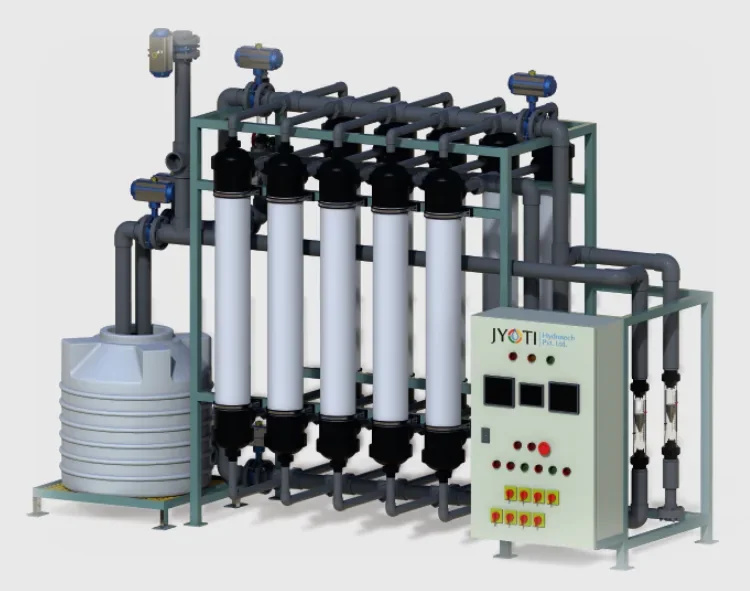
Ultrafiltration (UF) Plant
Advanced membrane filtration for high-purity water
View details →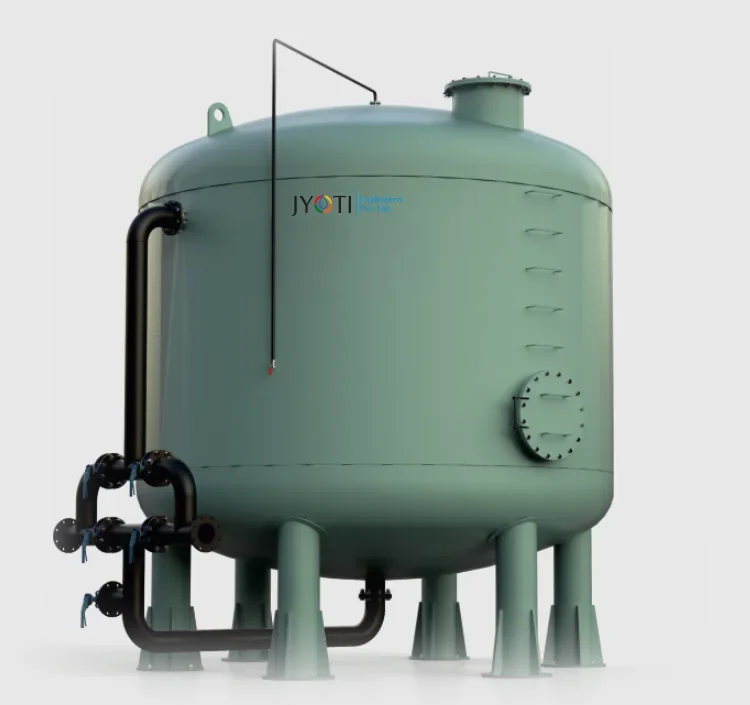
Multi Grade & Activated Carbon Filter
Reliable filtration for cleaner feed water
View details →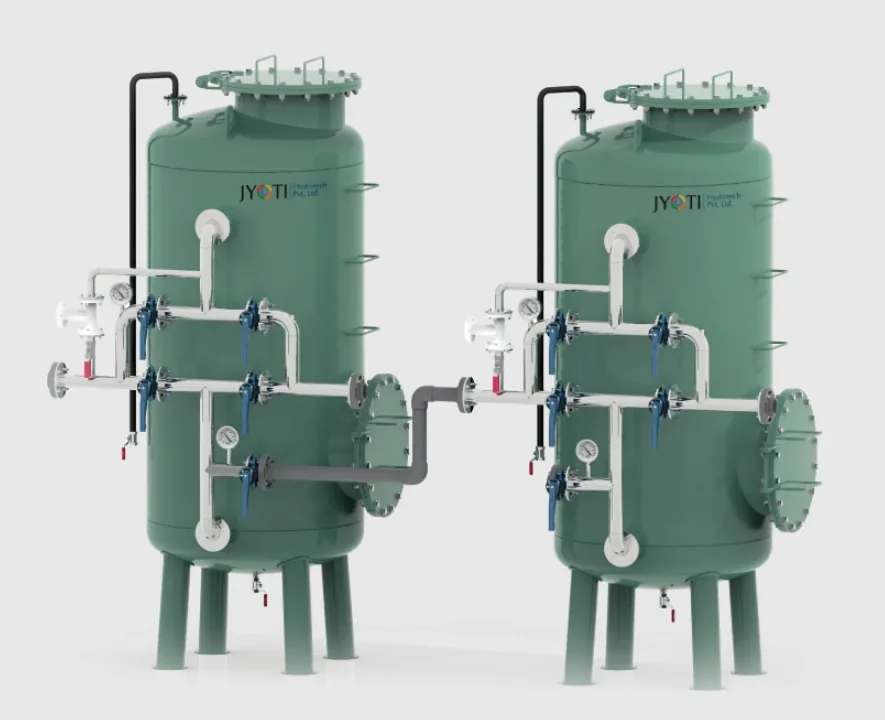
DM Plant & Mixed Bed
High-purity water for critical industrial applications
View details →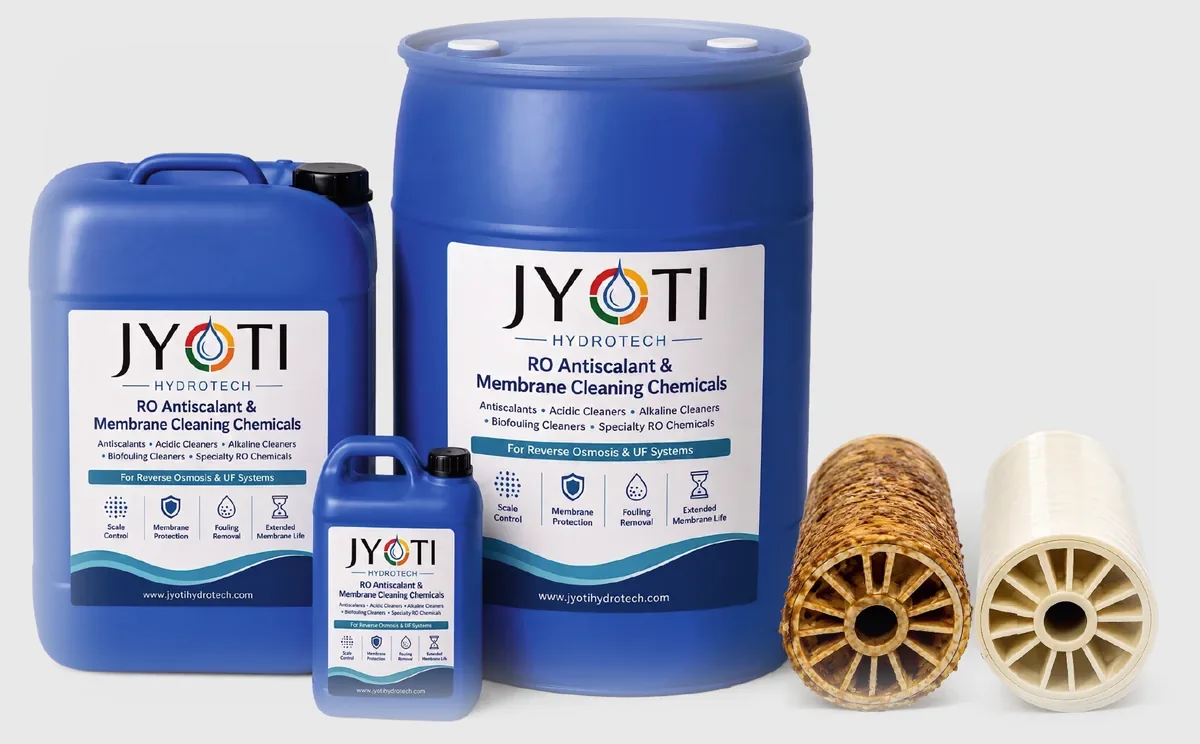
RO Antiscalants & Membrane Cleaners
Antiscalants, cleaners and MEE chemicals
View details →Want the full product booklet?
All Jyoti systems, equipment and the 78-product chemical range in one document.
Get a quote for your plant
Tell us about your water source, effluent, capacity and site. An engineer reviews it and comes back with the right scheme.
- Share your detailsWater or effluent type, flow (KLD / m³/h) and location.
- Engineer reviewWe call to clarify, and suggest sampling or a treatability study where needed.
- ProposalYou receive a technical scheme and commercial offer.