Why Is My ETP Not Meeting Norms? 8 Common ETP Problems and How to Fix Them
A field guide for plant managers and EHS heads: what each symptom usually means, what to check first, and how to fix it.
 Santosh Prajapati · Managing Director
· 4 min read
Most ETP failures trace back to a handful of causes: shock loads and poor equalization, wrong chemical dosing, too little dissolved oxygen or unhealthy biomass in the aeration tank, sludge not removed on time, and clogged or exhausted tertiary filters. Checking these in order solves the majority of outlet problems.
Quick diagnosis: what is your ETP telling you?
| Symptom | Most likely cause | First check |
|---|---|---|
| High COD / BOD at outlet | Overload, low DO, weak biomass | DO, MLSS, inlet load |
| Sludge floating in clarifier | Bulking or denitrification | SVI test, sludge age |
| Foam in aeration tank | Surfactants, young sludge, nutrient imbalance | Foam colour, F/M |
| Colour not removed | Wrong chemistry or dose | Jar test |
| High TSS / turbidity | Clarifier or filter problem | Sludge blanket, backwash |
| Bad odour | Septic conditions | Equalization mixing, DO |
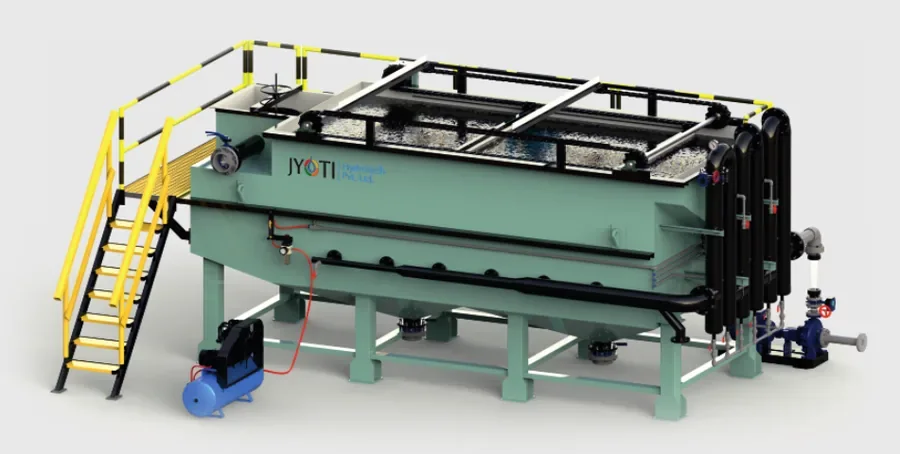
| Oil at outlet | OGS / DAF not working | Skimmer, DAF air and dosing |
| RO fouls quickly | Poor pre-treatment | SDI, UF / MGF performance |
1. Why is the COD at my ETP outlet high?
High outlet COD usually means the biology cannot keep up. Common causes are a shock load from production, dissolved oxygen in the aeration tank falling below about 2 mg/L, too little biomass (low MLSS), or a non-biodegradable fraction that biology alone cannot remove.
- Check DO at several points in the aeration tank and service the diffusers and blowers.
- Measure MLSS and MLVSS; reseed with bio-culture if biomass is weak.
- Improve equalization so peaks do not reach the aeration tank at once.
- Run a jar test – better primary chemistry often removes the hard-to-degrade COD.
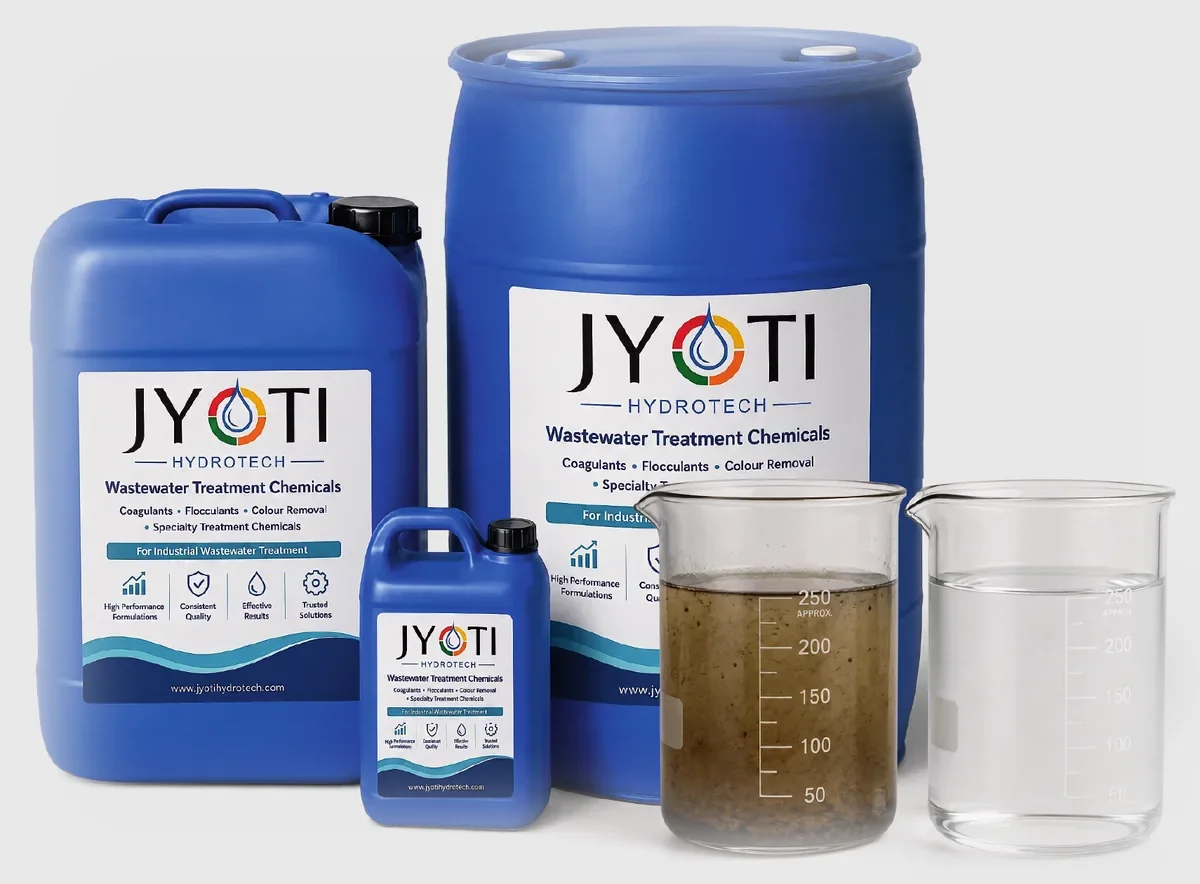
Jyoti JYOZYME bio-cultures help rebuild biomass after toxic or shock loads.
2. Why is sludge floating in my clarifier?
Floating or rising sludge has two usual causes. Sludge bulking – often filamentous bacteria – gives a light sludge that will not settle; a sludge volume index (SVI) well above about 150 mL/g is a warning sign. Rising clumps with gas bubbles point to denitrification, where sludge stays too long in the clarifier and releases nitrogen gas.
- Run a 30-minute settling test and calculate SVI.
- Correct DO and nutrient balance (nitrogen and phosphorus) in the aeration tank.
- Increase sludge withdrawal so sludge does not sit in the clarifier.
- Check the clarifier scraper and sludge recirculation pumps.
3. What causes foaming in the aeration tank?
White, billowing foam is common at start-up or when biomass is young. Thick brown, stable foam often signals filamentous organisms or excess sludge age. Detergents and surfactants from processing also create foam.
- Note the foam colour and texture – it points to the cause.
- Adjust sludge wasting to correct sludge age.
- Use a compatible defoamer such as Jyoti JC-713 as a short-term control (see the range).
4. Why is colour not removed?
Dyes are often only partly biodegradable, so colour is mainly removed in primary treatment. If colour passes through, the coagulant type, dose or pH is usually wrong for the current dye mix – which changes with production.
- Run a fresh jar test on today’s effluent.
- Use a colour-removal chemical suited to the dye class, such as JC-706 or JC-720-H.
- Make sure flocs are removed efficiently – a DAF handles light coloured flocs well.
5. Why is TSS or turbidity high at the outlet?
Solids escaping usually come from the clarifier or the tertiary filters.
- Check the sludge blanket depth – a high blanket washes solids over the weir.
- Check polyelectrolyte dosing and floc size.
- Backwash the multi grade filter on schedule and check the media level.
- Consider a tube settler, lamella or UF stage for a consistent polish.
6. Why does my ETP smell?
Odour – especially a rotten-egg smell – means septic conditions: effluent or sludge sitting without oxygen. Typical spots are the equalization tank, sludge sumps and dead zones in the aeration tank.
- Keep the equalization tank mixed with air.
- Remove sludge regularly; do not let it accumulate.
- Check for dead zones and blocked diffusers.
- An odour-control bio-culture such as JYOZYME-OD can help at sumps and tanks.
7. Why is oil and grease reaching the outlet?
Free oil should stop at the oil & grease separator; emulsified oil needs chemical breaking and a DAF. Oil that passes through also coats the biomass and lowers treatment efficiency.
- Clean the OGS and check the skimmer.
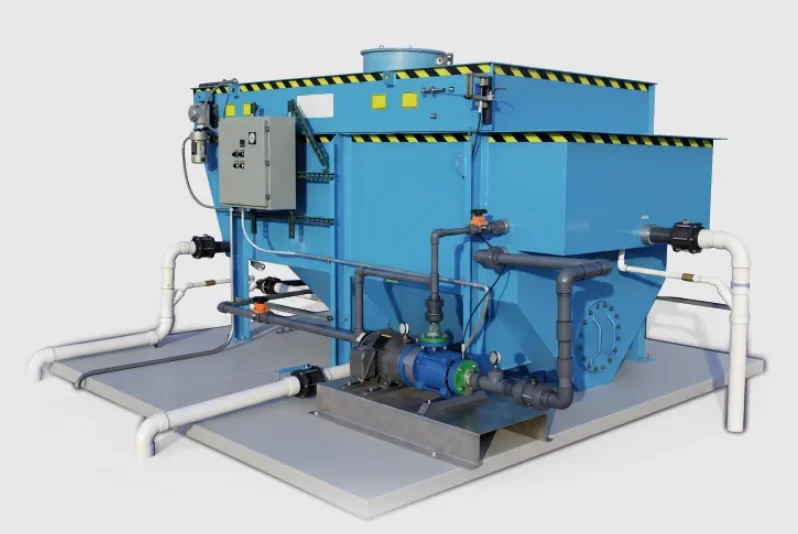
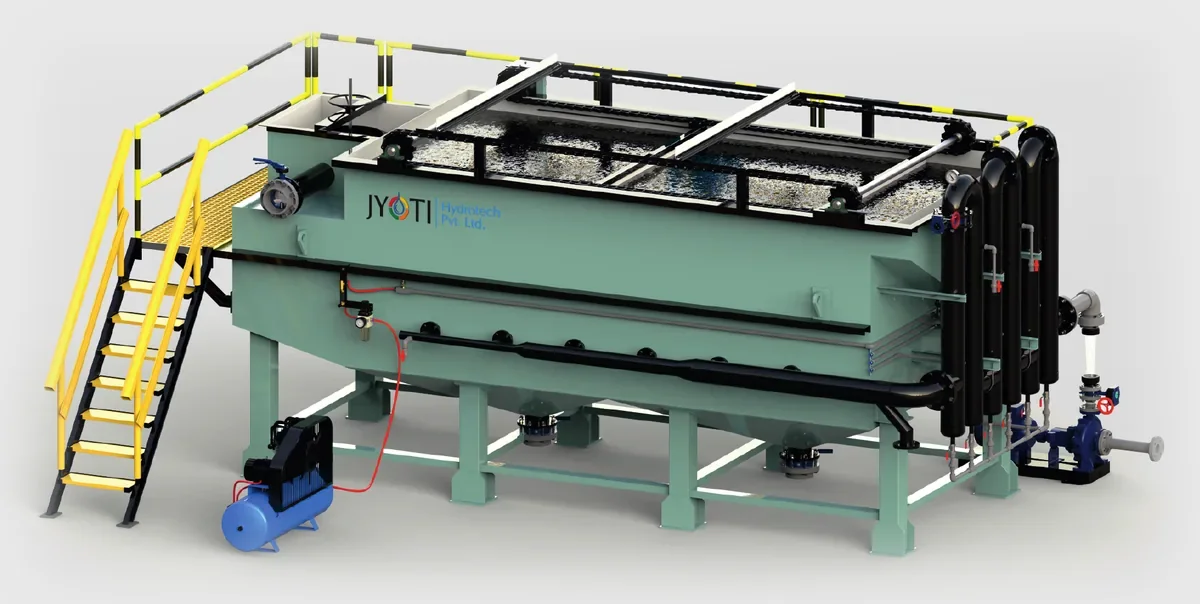
- Check DAF air saturation, recycle flow and chemical dosing.
- Find and fix oil sources in the factory – housekeeping prevents most oil load.
8. Why does my RO foul so quickly after the ETP?
When treated effluent feeds an RO, membrane fouling is almost always a pre-treatment issue: suspended solids, organics, biological growth or scaling.
- Measure SDI and turbidity of the RO feed.
- Upgrade to UF if a media filter cannot give a stable feed.
- Use the right antiscalant and cleaning programme (RO chemicals).
- Control biofouling with a suitable biocide or biofouling cleaner.
When should you call for a professional ETP audit?
If outlet results keep failing after the basic checks, or the plant is being asked to handle more production than it was designed for, an audit is cheaper than repeated non-compliance. Jyoti’s plant audit and troubleshooting service checks every unit against its design, tests the chemistry and recommends corrections – from dosing changes to capacity upgrades such as MBBR media or a DAF.
Key takeaways
- Check equalization, DO, MLSS and chemical dosing first – they explain most failures.
- Floating sludge, foam and odour are biology and sludge-management signals.
- Colour and oil are usually fixed in primary treatment, not in the aeration tank.
- Fast RO fouling after an ETP means the pre-treatment needs attention.
Frequently asked questions
What DO level should an aeration tank have?
A common operating target is around 2 mg/L of dissolved oxygen, measured at several points. Your plant’s design may specify a different range.
What is SVI and why does it matter?
Sludge volume index measures how well activated sludge settles. A high SVI means a light, bulky sludge that may not settle in the clarifier.
How often should ETP sludge be removed?
Regularly, as set by the design and the sludge quantities measured during operation. Letting sludge accumulate causes septic conditions, odour and floating sludge.
Can an old ETP be upgraded instead of replaced?
Often yes. Adding MBBR media, upgrading the primary stage with a DAF, improving chemistry or adding UF can restore or raise capacity in the same footprint.

Santosh Prajapati founded Jyoti Hydrotech Pvt. Ltd. in Surat in 1993 and leads the company as Managing Director. Under his leadership Jyoti has designed, built and run water and wastewater treatment plants for Indian industry – ETP, STP, RO, ZLD and more – and exported systems to eight countries.